12 panels · Automated checks complete

Two weeks after the doctrine entered the record, Alderline's counsel came to Marrow Lane in person, which was how Hana knew the offer would be generous.
He laid it out in the corner office with lovely manners: payment in full, interest, costs. In exchange — the fabrication finding withdrawn, the doctrine catalogue sealed by consent, a mutual statement about process improvements. Nobody admits, nobody alleges, everybody eats.
"The family would be made whole by Friday."
"I'll carry it to them exactly as you've said it."
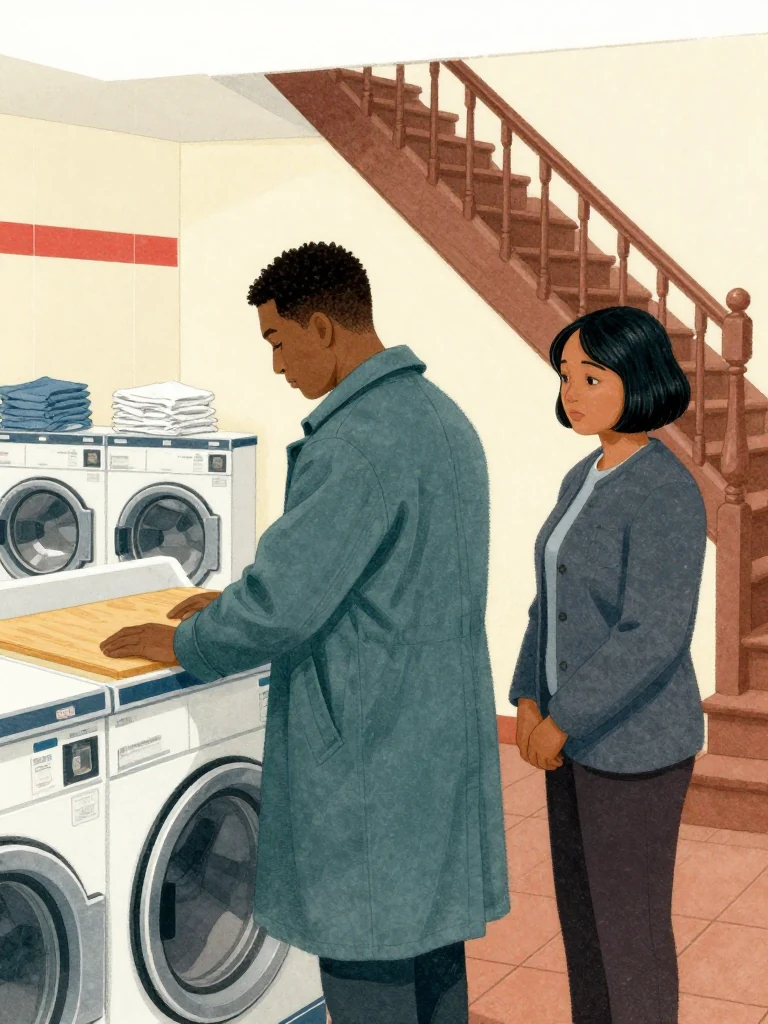
She did, at the laundrette counter, with the fresh paint smell around them and the machines under dust sheets like furniture in a house not yet lived in. She gave it neutrally — the money, the silence, the arithmetic of both — and then made herself stop talking.
Sam looked at his father. Grandma Ndidi's machine had stopped overhead — the whole house listening. His father polished the counter once, out of habit.
"Say the number again."
Hana said the number again. It was a good number. It was, if she was honest, more than the claim.
"And for this they want — what exactly? Say it plain."
"Silence. The finding withdrawn. The pattern sealed. Legally, forever."
He nodded slowly, and asked his one question.
"The sealed catalogue. If it is sealed — the next shop they do this to. Duru, the key-cutter, the café. Does the seal protect them, or the company?"

"The company."
"Then no. This street watched my family carried out of a fire in paperwork. The paperwork protection — that is the claim. The money is only money."
Sam translated nothing, softened nothing. He looked younger and older at once.
"You heard him. We fight it open."
"Sam. It's your family's money on the table too. Yours included."
"And it's my street. Papa's right — you don't sell the smoke alarm to pay for the fire. Write the refusal, boss. Big letters."
"There's no big-letters option on the form."
"Then write it twice."
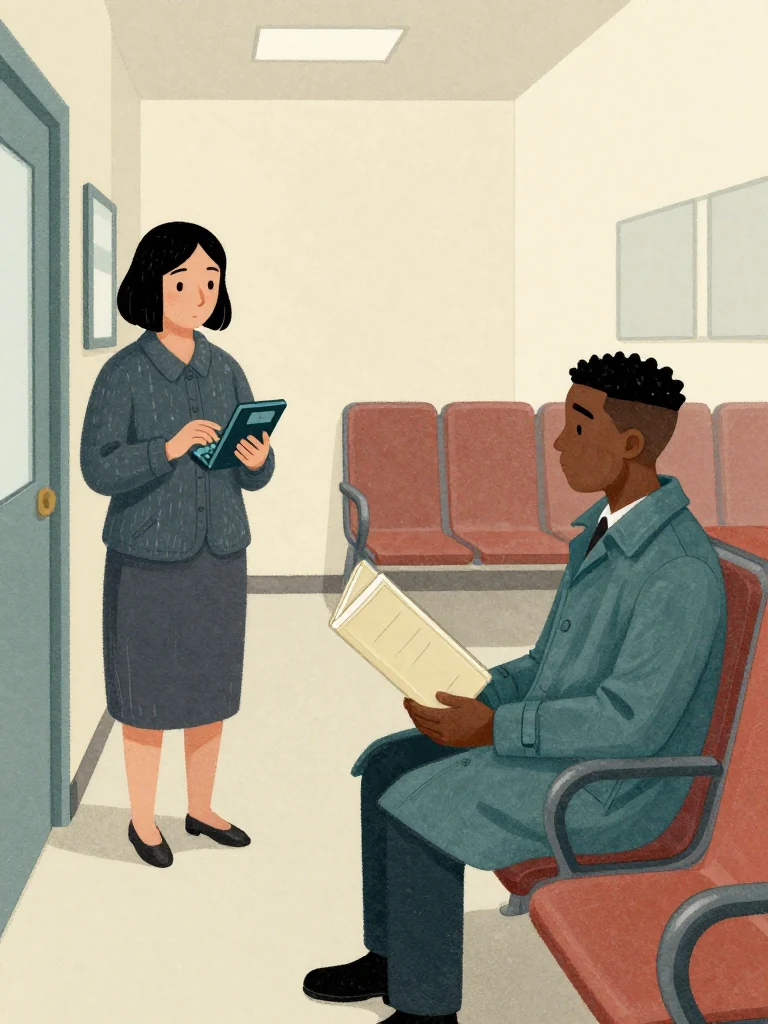
The borough hearing room was civic-plain after Alderline's suites — stacked chairs, radiators drying December coats, justice as furniture. On the hearing morning, Hana opened with the motion she owed the season: enter the full doctrine catalogue, all five tests, publicly.
Alderline's counsel rose with the procedural blade she'd known was coming.
"The catalogue stays out, or the hearing stops here."
"On what grounds?"
"Commercial confidentiality of investigative methodology cuts both ways, madam chair. If Ms Cho's tests enter, they enter whole — methods, thresholds, procedures. All of it examinable. All of it public."
Half an hour of wrangle produced the real price. Full method disclosure as the cost of admission — every test, every technique, on the open record where anyone could read it. Where he would read it.
Hana asked for a recess of ten minutes and stood in the corridor with her watch turned inward, doing the arithmetic she had been refusing all season. The method survived by being right. But it endured by not being fully mapped — by keeping reserve tests the author couldn't pre-empt. Spend everything here, and season after season he would write around her.
Sam was in the public seats — the family's watcher. He caught her eye and held up his notebook, tilted: your own rule, boss. Planted, insufficient, sufficient. She almost smiled. The rule had one more clause now, the one the season had taught her: and never spend the whole archive where the forger shops.

She went back in and priced it.
"Three tests disclosed. Two under seal. The sealed tests go to the panel under supervision — examined, verified, and kept from the public record. That's the offer."
Counsel spoke mildly, for the minute-book.
"That is concealment."
"That is budget."
Hana said it for the same book.
The panel conferred, and took the seal — supervised examination, verified findings, public record redacted. Alderline's press office would have its headline either way; she had chosen which one.
The chain went in the way she had built it to go in — counted, ordered, each fragment standing on its planted feet.
"The dates, the witnesses, the templates, the flaws — in that order."
The diagram created before its own report. Mrs Adeyemi's Deptford week. The retired template build under two files. And the catalogue: one deliberate falsehood per document, four files and a 1981 microfiche deep, a signature by any standard the panel cared to test.
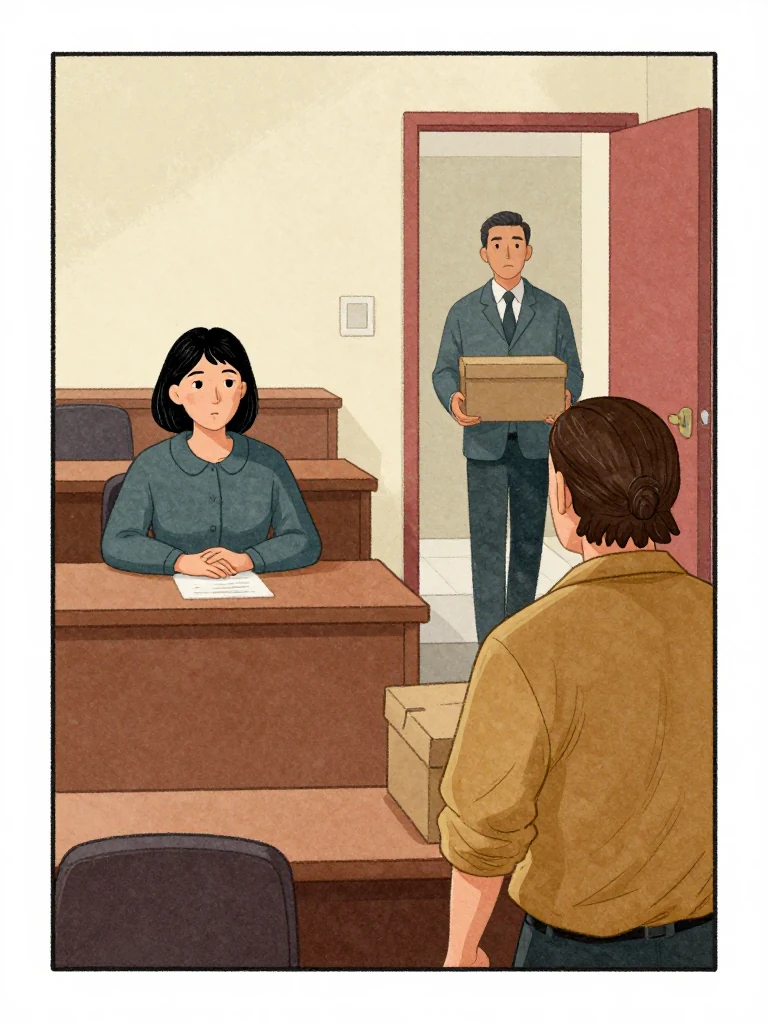
Then the door, and Gerald Sass, carrying a box file like a man carrying his own resignation and hoping to be talked out of delivering it.
He spoke to the panel, not to her.
"The directorate's vendor-pathway review. Findings services procured through an approved intermediary. Chain of custody for source materials—"
A pause with a career in it.
"—cannot be produced. My signature is on the approvals. Note that I brought it anyway."
He sat down next to nobody. For one strange moment, across the civic furniture, he and Hana were on the same side of a single fact, and both of them knew it, and neither of them looked at the other.
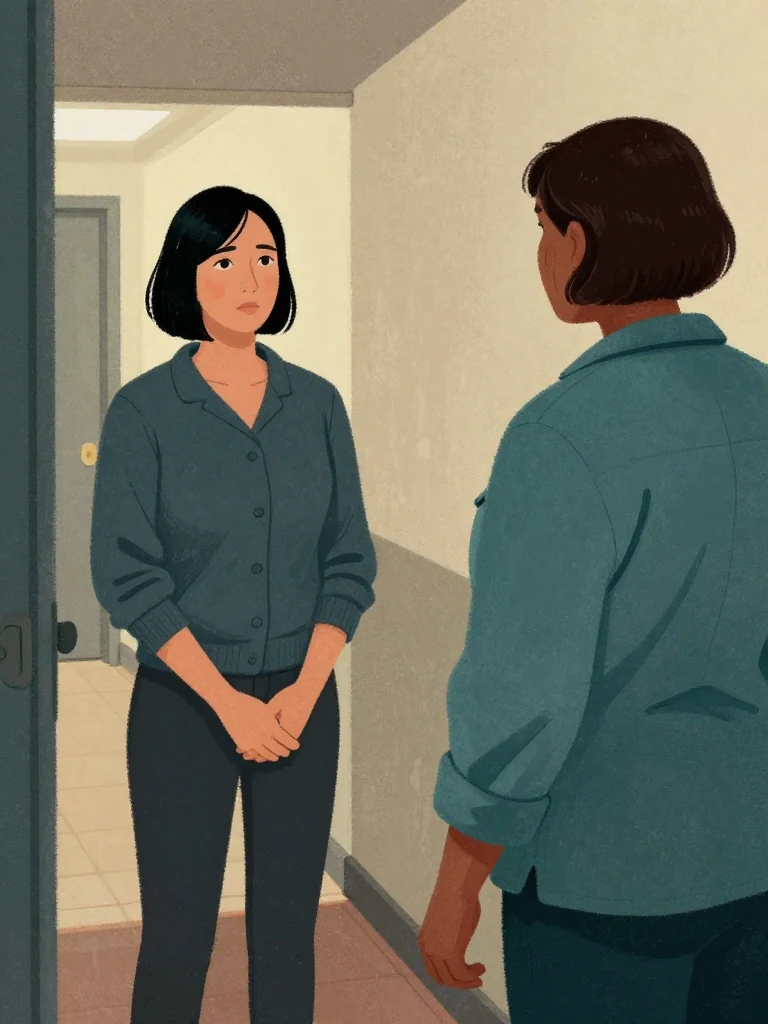
The panel retired for forty minutes and came back with institutional wording — no committee says fabrication; committees say cannot be relied upon. But the operative sentence was the one Hana had been building toward since a trunk and a rejection letter arrived in the same October morning.
The claim is paid in full on the merits.
And the second sentence, better: all associated findings and the doctrine catalogue referred to the Metropolitan Police, economic crime, for assessment.
Brook was waiting in the corridor, because of course she'd had someone in the room. She held out her hand for the bundle Hana had been assembling for six weeks.
"Send it all to me. Properly. It's a referral now."
"You'll own it inside. It'll be your name on a cluster your bosses triaged out months ago."

"It'll be my name on the referral that came with its own reproducible tests and the target company's internal review attached. I've had worse mornings."
She took the bundle's weight, checked it like evidence, and turned to go. Then, over her shoulder, flat as a stamp:
"Well built, Cho."
Not Ms Cho. Hana stood in the corridor a full ten seconds, learning the size of a one-word promotion.
Priya rang that evening from what sounded like a bakery.
"Verdict?"
"Paid in full. Referred in full. Sealed in part."
"Which part?"
"The two tests you'd have sealed."
"Correct answer. I'm buying the cake now — I told you about the cake. And Han — I'm staying. At Alderline. Before you ask."
"I wasn't going to ask."
"You were going to not-ask loudly. I'm staying because someone should be inside when Brook's referral comes knocking, and because I've spent six years making my access boring. Boring is about to be very useful."
"Pri."
"Say thank you by winning season two."
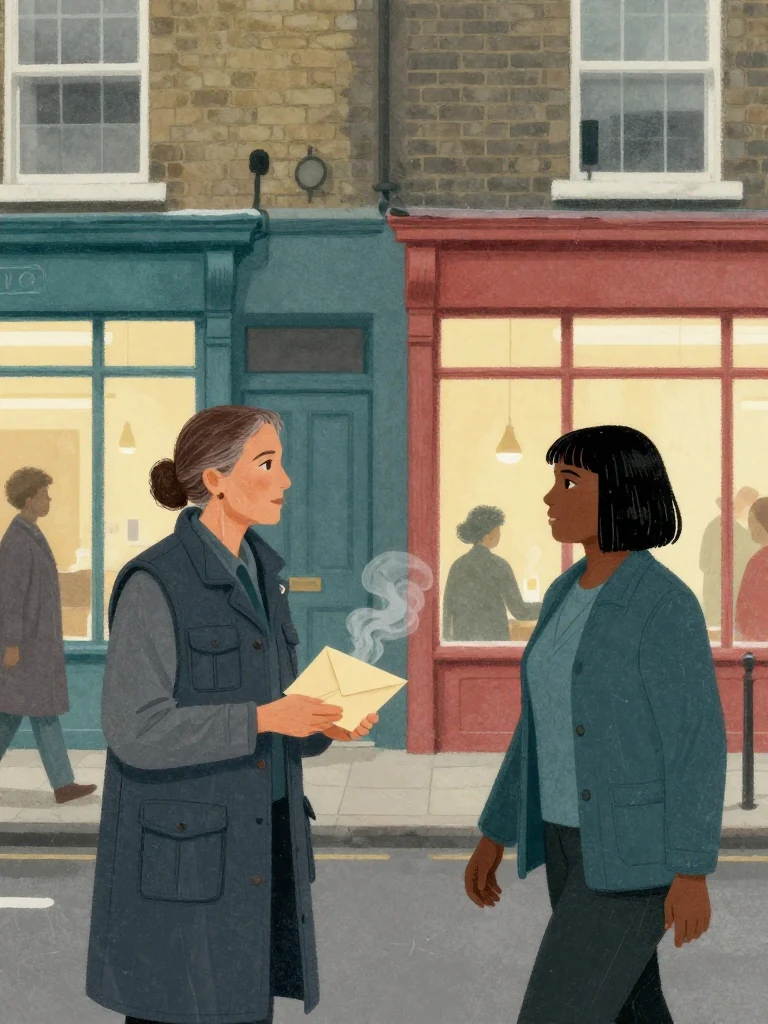
The laundrette reopened that Saturday. Steam on the windows, fresh paint over old smoke, Grandma Ndidi's sewing machine running in the window like a heartbeat restored. The street came through in shifts. Duru brought fish. Somebody's speaker played highlife. Sam's father stood at his counter with the till drawer open — nineteen years of paper and one new sheet.
Sam found her by the door and pressed something small and bright into her hand. A brass key, fresh from the cutter.
"Office key. Yours cut mine, so mine cuts yours. That's how it works, boss."
"That's not remotely how anything works."
"It's how we work. Also I alphabetized the case files while you were being historic in a hearing room. You'll never find anything again."
"Sam."
"Under O. For office. You're welcome."
Rosalind came late, which was somehow correct, and stood at the edge of the warmth with her coat still on until Hana came to her. She had an envelope in both hands, held the way she held clipboard lists — as procedure, because procedure was where she kept her feelings.
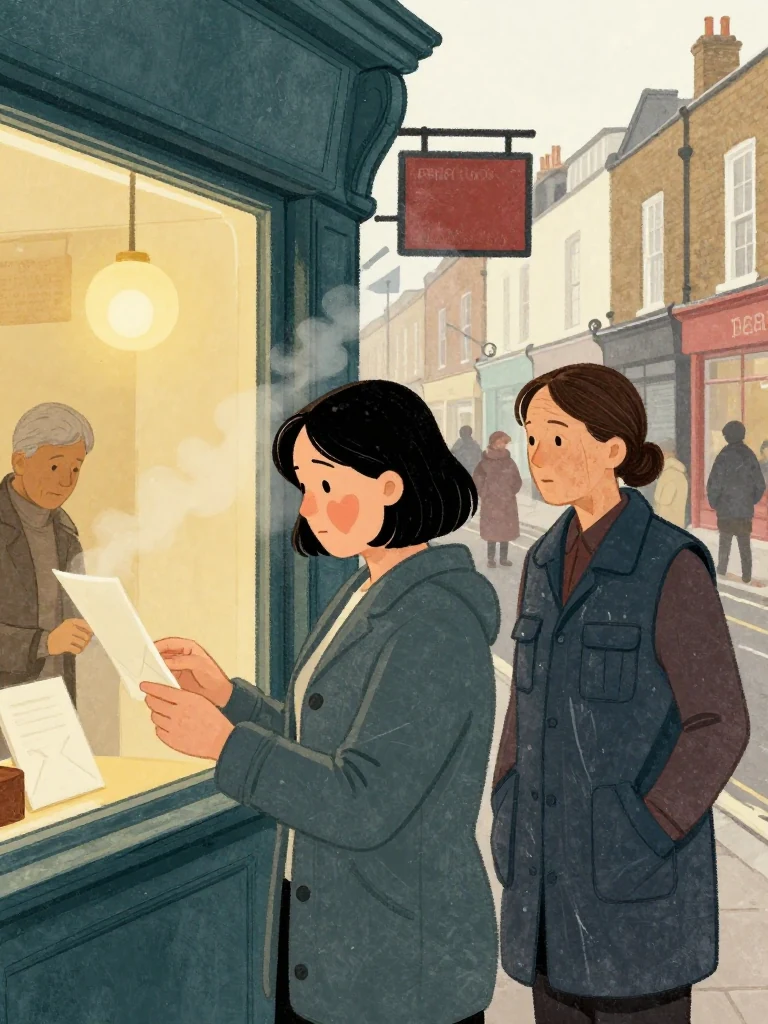
"He left one more thing. Addressed to you. Deliverable when the ninth was asked about."
The envelope said, in the typesetter-straight hand she knew from forty margins: For my second reader.
"You've had this since the funeral."
"I've had it since the funeral. The solicitors had the condition. You met it — Tuesday, when your referral bundle cited the missing volume."
A pause.
"I didn't read it. I nearly burned it twice. Walter would have known the count exactly."
Walter. The one time.
Hana opened it there, in the steam and the highlife, with Rosalind watching — the audit deserved its witness. Two lines, ink, no salutation, initials.

You'll need the ninth. He knows why.
W.F.
Around them the street celebrated the season's visible victory: a claim paid, a family whole, windows lit. Hana read the two lines three times and felt the season fold itself into the shape of the series — a named volume, a knowing taker, a chosen reader.
Rosalind read her face rather than the page, and nodded once, and finally unbuttoned her coat, which was as close as the Finch family came to joining a party.
Sam appeared with three teas.
"Season's over, then."
Hana put the letter in the pocket over her heart, where the sliced card's photograph already lived.
"No. The reading is."