12 panels · Automated checks complete
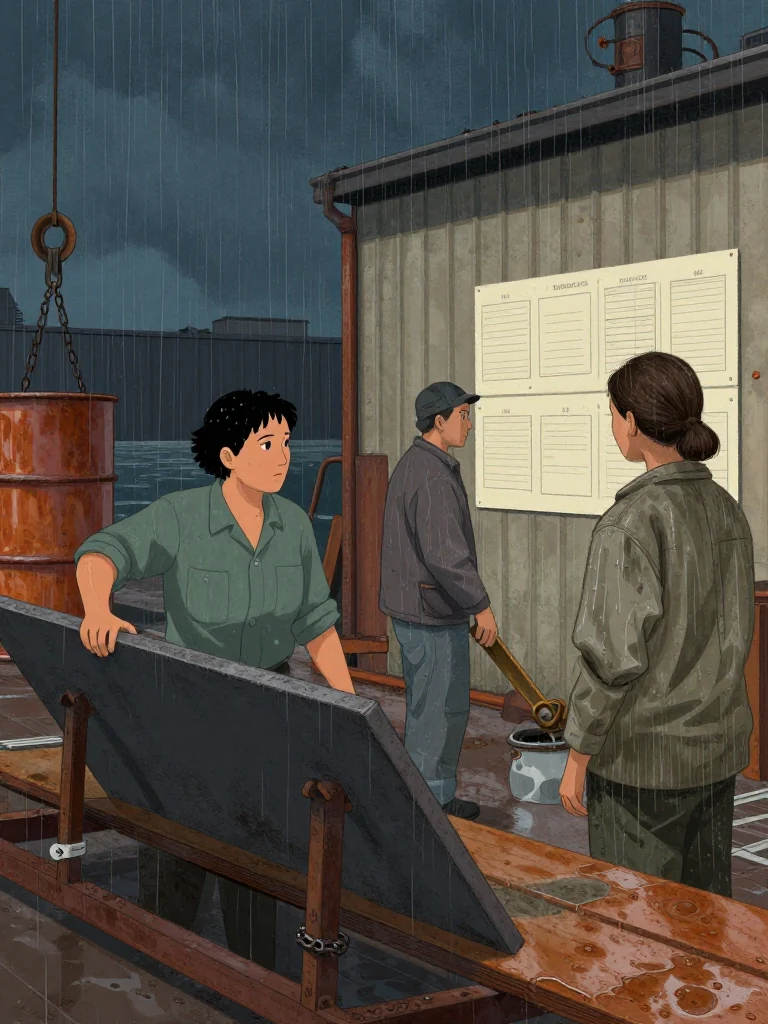
Seventeen days after the hearing, the festival strung its bulbs along both banks, and Port Lassiter did what it had done every November for ninety years: it put its whole population on the far side of the water to watch the fleet lights come up the channel at king tide.
Noor spent the week before it like a woman provisioning a siege. The yard's flat barge sat loaded at Slip Six — ballast drums, hardwood shims cut to three thicknesses, the chain hoists serviced. Crew assignments went up on Marta's shed wall. And at the bench, with Juno and Teo and the deckhand crowded in, she read Entry 55 aloud from the binder, because the fair way to use a dead man's idea is to say it before you need it.
"Entry fifty-five. Tide as a jack. A loaded barge positioned under a span at low water becomes a pier at high water. The sea will lift what no crane in this county can. Margins: displacement, trim, and timing. The tide does not wait and does not hurry."
Teo whistled through his teeth.
"He ever do it?"
"Nineteen eighty-one, the old coal dock. Two boxed margin notes and a sketch. He did it."
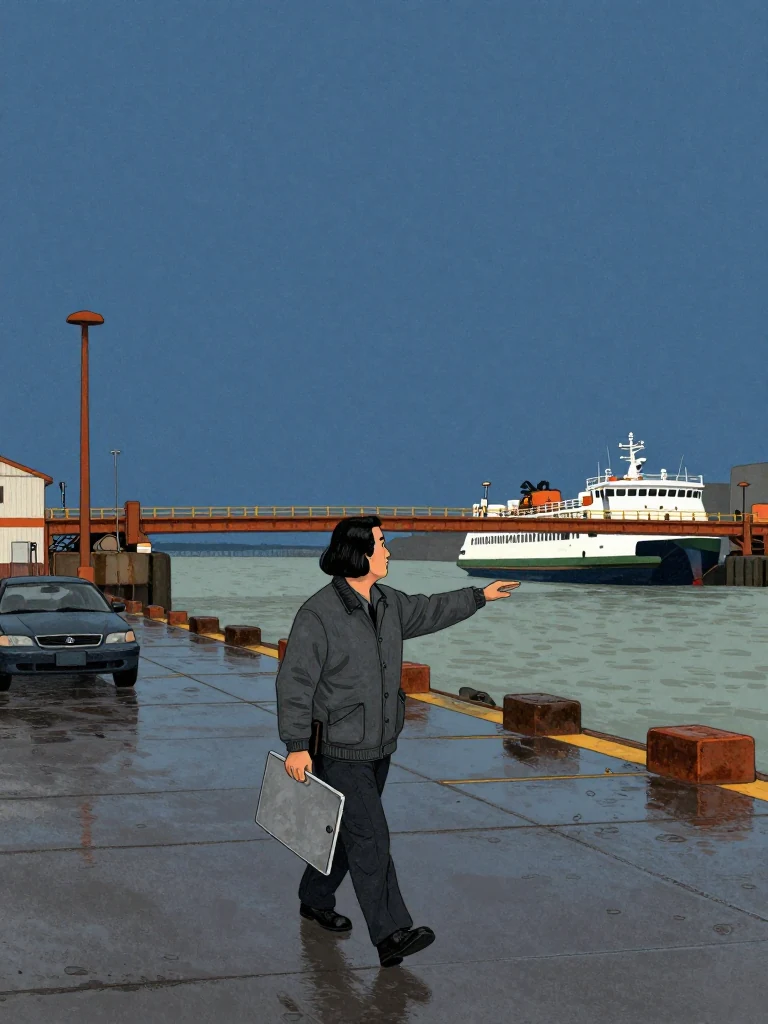
"And you think we'll need it."
"I think if I were spending this town's margin on a calendar, festival night at king tide is the last page. I'd rather stage a barge for nothing than read about it in a report."
"What's my station if it goes?"
"Push-boat. Marta has the sheet. Juno, you're trim, same as always, bigger numbers."
"Bigger numbers, same count."
The state inspector arrived Thursday — a compact woman named Ferro with a state car and no small talk, in town for the referral question the delayed vote had forced upstate. Reyes walked her the waterfront all afternoon. Noor showed her nothing and said less, on purpose. If the season had taught her anything, it was that the record does the talking or nobody does.
Saturday came up clear and cold, and the tide table said 19:41.
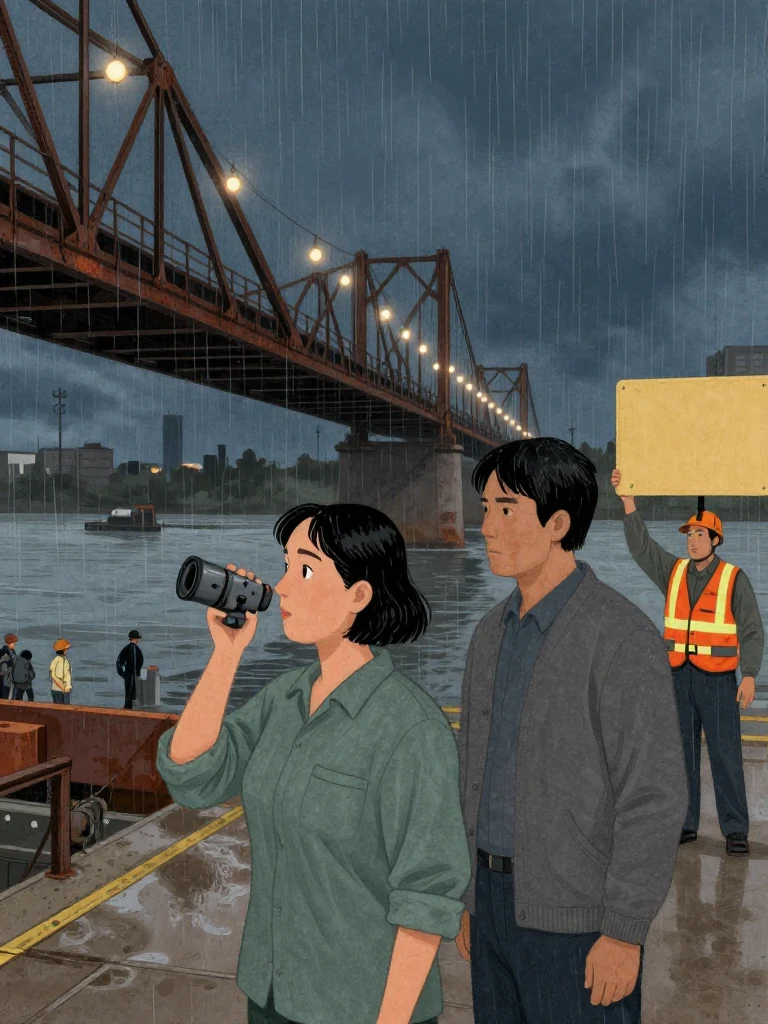
At 19:02, with the far bank shoulder to shoulder under the bulbs and the fleet still down-channel, the swing bridge's span lock let go.
Noor heard it from the near abutment — a gunshot of steel followed by the wrongest sound a bridge can make, the slow grind of a leaf settling out of line. The crowd noise on the far bank changed pitch. The leaf sat two degrees skewed, span lock sheared, bearing complaining, and a thousand people stood on ground the king tide would begin reclaiming within the hour.
The deckhand had the manual open before she asked, because that was the procedure, and he read it and looked up.
"Close it and wait, the book says. The book has never watched this bank go under at king tide."
"No, it hasn't. Radio the yard. Barge goes now."
Reyes was already at her shoulder with Ferro two steps behind, and Noor said it to both of them at normal volume, because the record was standing right there and the record does the talking.
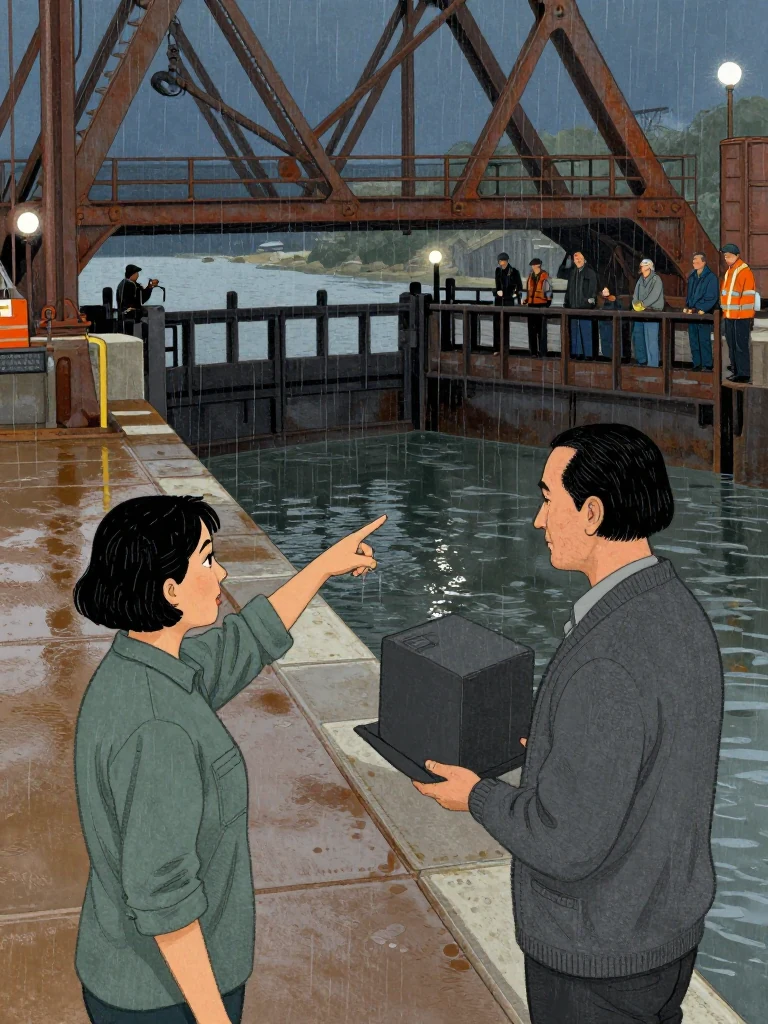
"Marshal, I'm advising an emergency hold. The far bank floods above the ankle by nine. Boats can move maybe two hundred people in that window. The other eight hundred come across this span or they stand in seawater in the dark. I can hold the span through the tide window with a stated margin. Or we can wait for a state crew that's three hours out."
Ferro looked at the leaf, and the water, and the crowd.
"Whose method is the hold?"
"Gideon Marsh's, entry fifty-five, dated nineteen eighty-one. Mine to run. Yours to watch."
"Then I'm watching. Proceed, Marshal?"
"Proceed."
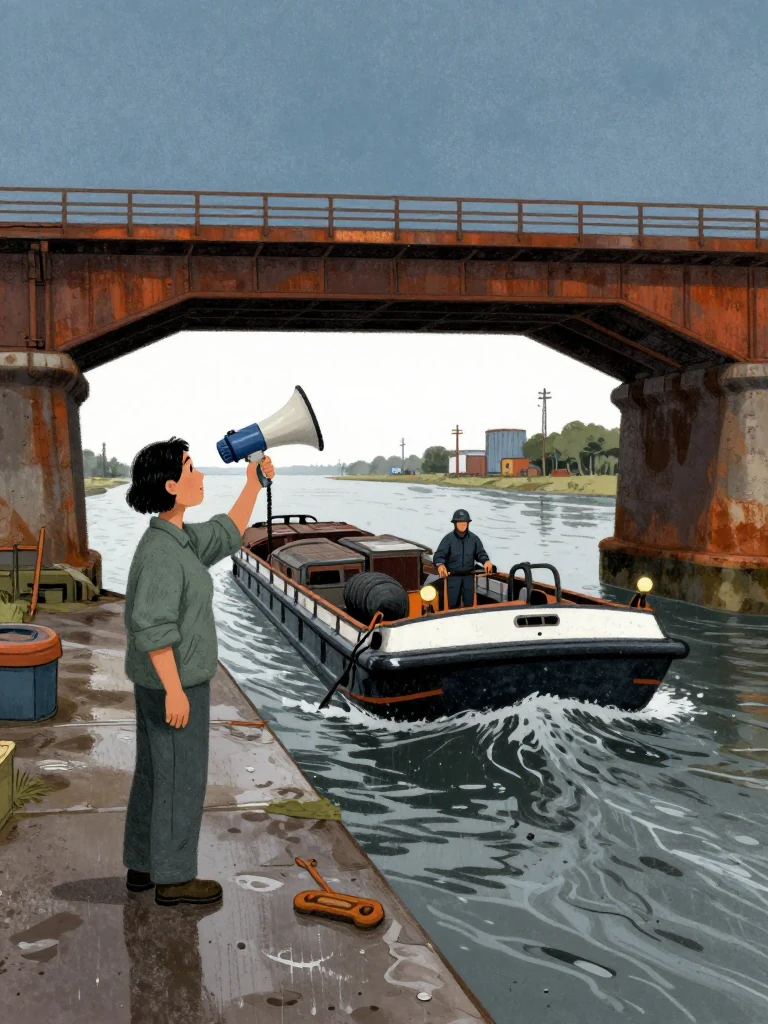
The barge came around the point eleven minutes later with Teo on the push-boat and the drums trimmed to Noor's sheet.
"Fender clearance?"
"Boat-length. Coming in slow."
"Slack's got twenty minutes. Seat it center on my mark and kill the engine — from there the sea does the work."
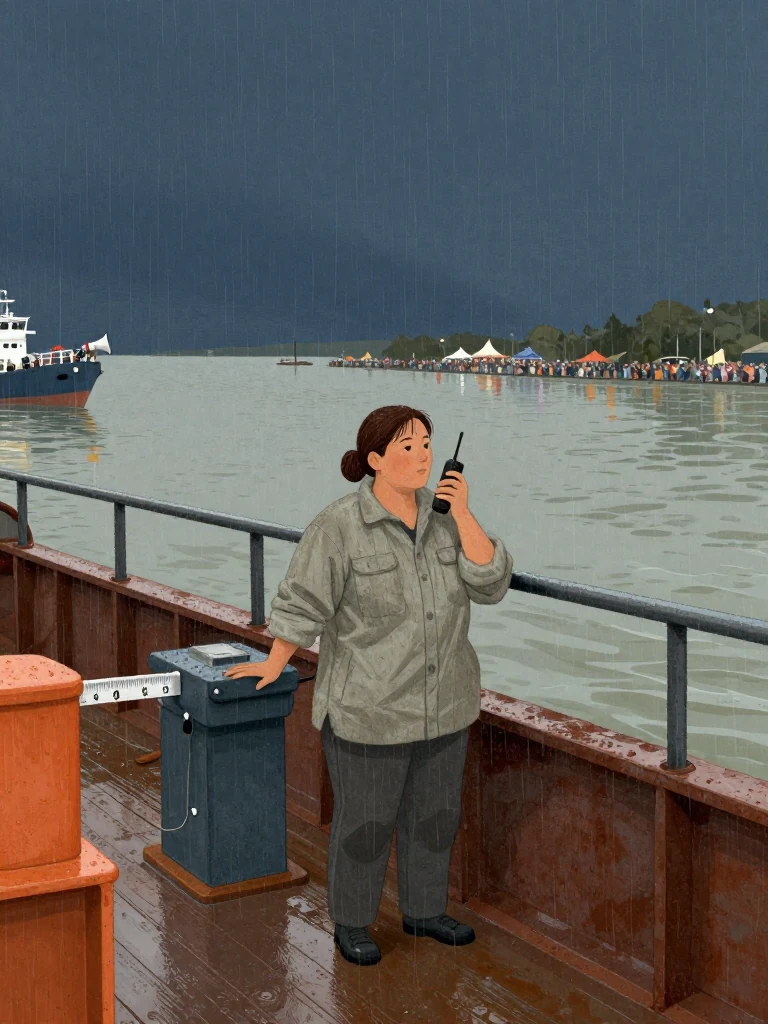
Getting it under the span was the surgery, and then it was done: the barge sat in the gap between fender and leaf, and the sea began, on schedule, to do what no crane in the county could.
Noor took the megaphone because the crowd needed one voice.
"The barge is the pier. The tide is the jack. The shims spread the load. Juno reads the trim."
She named the stations the way she had named them at a pump station in September, and eight hundred people listened to engineering at seven forty at night because their feet were getting cold and her voice wasn't.
"This holds as long as the tide holds the barge. When the water goes, the bridge closes. Walk, don't run, and count with us."
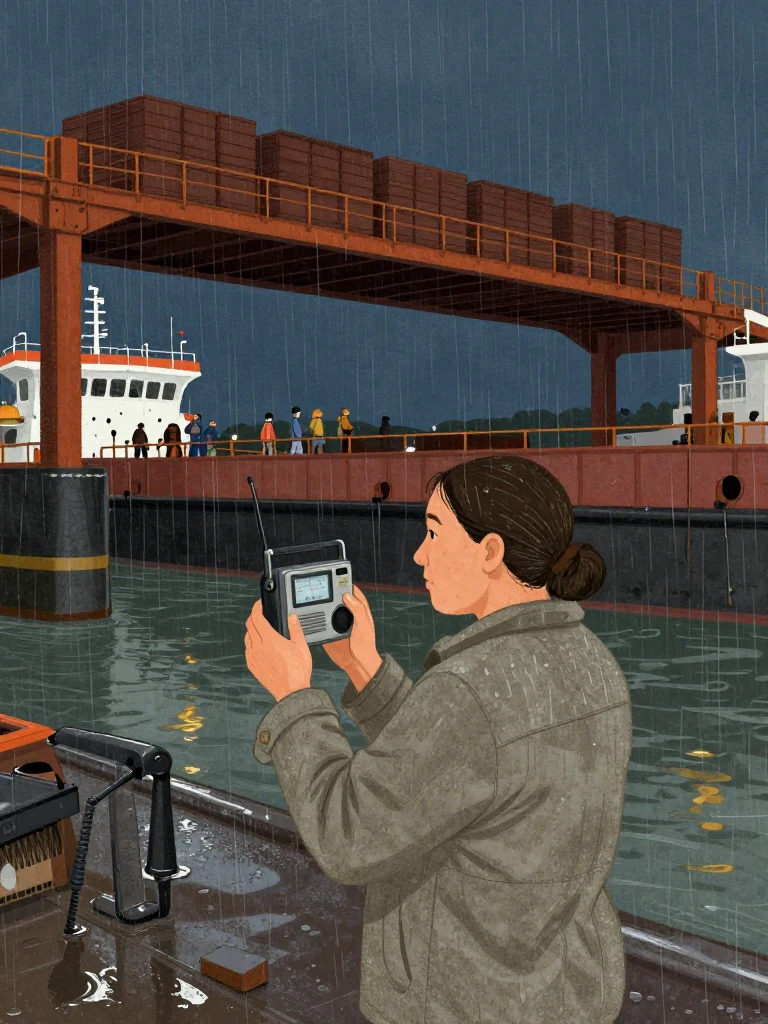
The tide came up under the barge the way it had come up under the pontoon in October — a patient jack, on schedule, indifferent to festivals. The hull groaned into the span's underside, took the leaf's dead weight through the shim stacks, and the two-degree skew eased back toward true as the bearing unloaded.
Juno's voice came over the radio and out the megaphone, steady as a metronome.
"Freeboard sixty-two. Sixty-two. Sixty-one. Holding."
They crossed at a walk, eight and ten abreast, counting. Parents counted out loud to children to make it a game. The fleet lights came up the channel behind them, and the whole absurd, engineered, nearly murderous night turned into the best festival crossing in ninety years, because the town could hear its own margin being read to it in a nineteen-year-old's level voice.
At 21:15 the tide turned. At 22:40, the last of the load eased off the barge, the leaf settled its two degrees back, and the bridge closed itself on schedule, exactly as stated, and the crowd on the near bank applauded the water, which was the correct address for the applause.
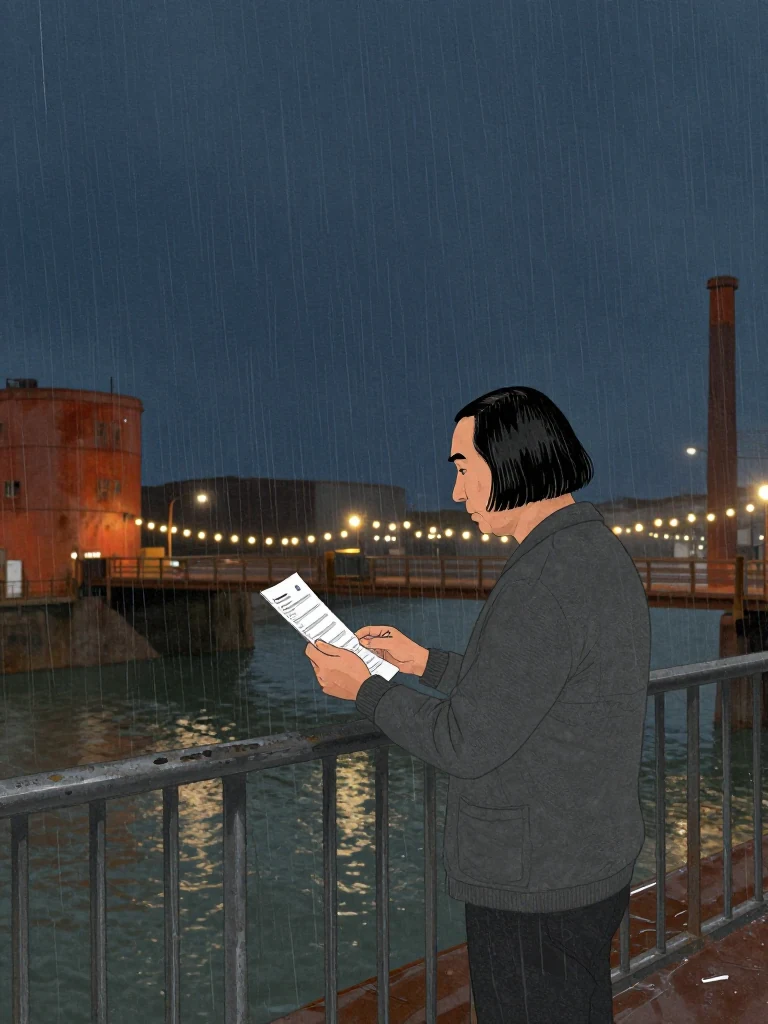
The span lock came apart under work lights at midnight. The sheared components told the season's story one more time — a retaining assembly starved and staged to fail under crowd load — and wired to the lock housing, neat as a professional, hung the sixth tag.
Reyes read the date twice, aloud, for Ferro and the camera.
"Tag six. Dated Tuesday. The lock failed Saturday."
"They tagged it before it failed."
"They've tagged everything before it failed, Inspector. That's what the catalogue is. Nine years of work orders for failures that hadn't happened yet."
Reyes wrote the referral standing at the bridge rail, and read it into the record with the festival bulbs still burning over the black water.
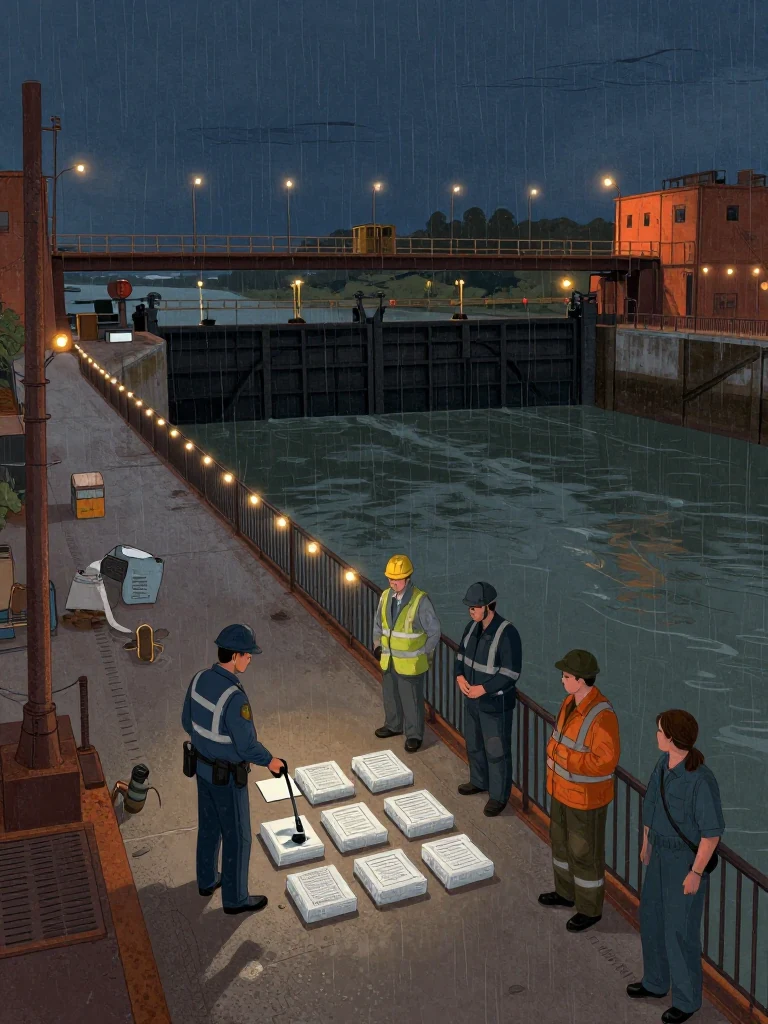
"This office refers the catalogued series, the die identification, and tonight's witnessed failure to the state board as one matter."
Ferro signed the receiving line. Six tags, the serif match, the count-back, the amended ruling, Gideon's margin catalogue, Juno's log — one chain, one matter, upstate. The referral does what the vote was never going to: it moves the question upstate, onto paper Calder cannot buy and Hale cannot frame.
"You understand this is slow. The board moves in quarters, not weeks."
"Slow and out of county hands beats fast and inside them. We've seen what's inside them."
"One more thing, Ms. Haddad. Your license file crossed my desk this fall. The inquiry convenes in the spring."
"I'll be there."
"Bring tonight. All of it. That's not advice I'm allowed to give, so I haven't given it."
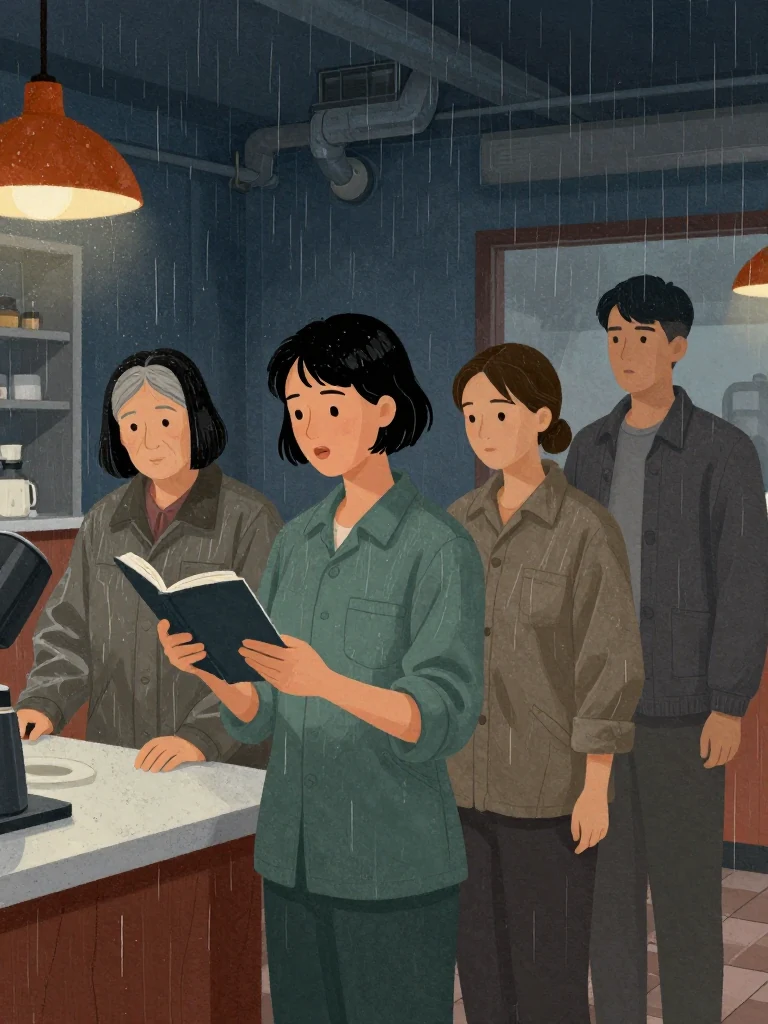
The diner stayed open past two, feeding the crews. And when the last plate was down, Coral wiped the counter in her figure-eight, once, and went to the till, and took the tray out.
"He kept the key in the till, under the tray. Nine years I didn't look. Tonight I want it read out loud."
The drawer in the back room opened without ceremony. Inside: one envelope, stamped and never mailed, addressed to the state licensing and safety board in a hand Noor knew from forty years of margins — the boxed capitals gone careful, like a man printing on ice.
Noor read it standing, out loud, to Coral and Juno and Reyes and the smell of coffee.
Gideon had written it the winter after the elevator fell, and his sentences came off the page in his own boxed cadence.
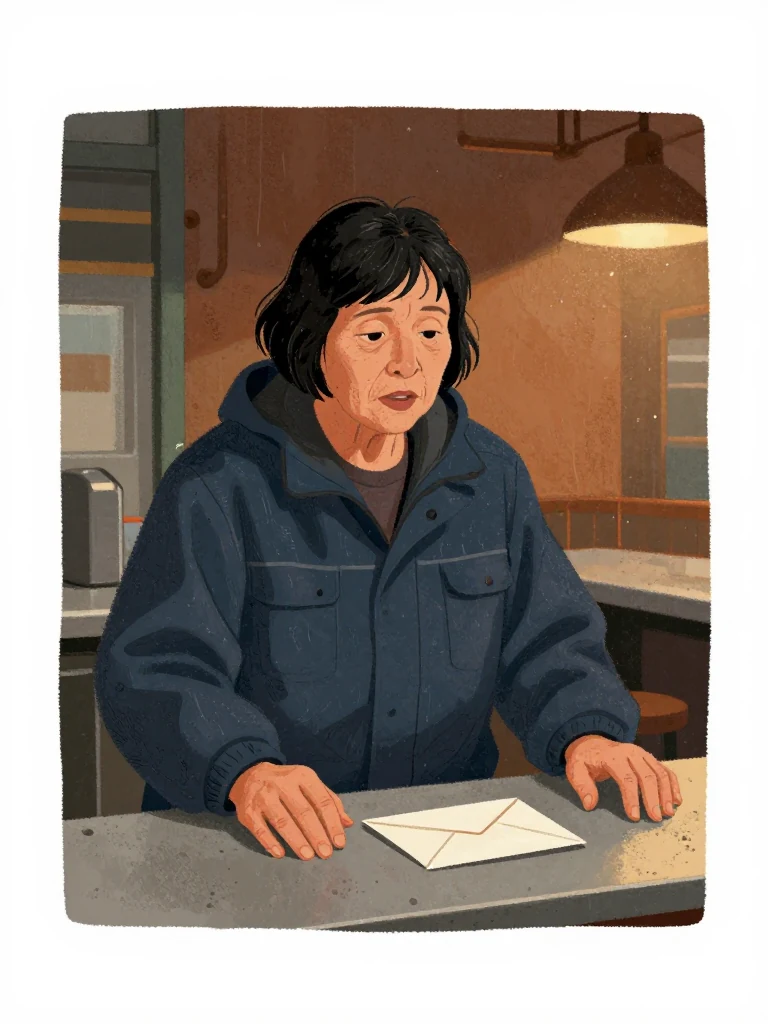
"To the board. In the pit of the Lassiter grain elevator I found brake shavings that a maintained brake does not shed, beside a maintenance record too clean to have been kept by hands that did the work."
"I believe the collapse was arranged inside its own paperwork, by a person who knew this county's calendar and carried this county's keys. I believe Raymond Ostler died of that arrangement."
And then the last paragraph, the one that explained nine years, and the unsent address, and Entry 112 stopping mid-line.
"I cannot prove the hand. Until I can, this letter is a stone I am not entitled to throw."
Nobody spoke for a while. Coral stood with her hands flat on the counter, and when she did speak it was to the envelope.
"He was waiting to be sure. He was still waiting when his heart quit."
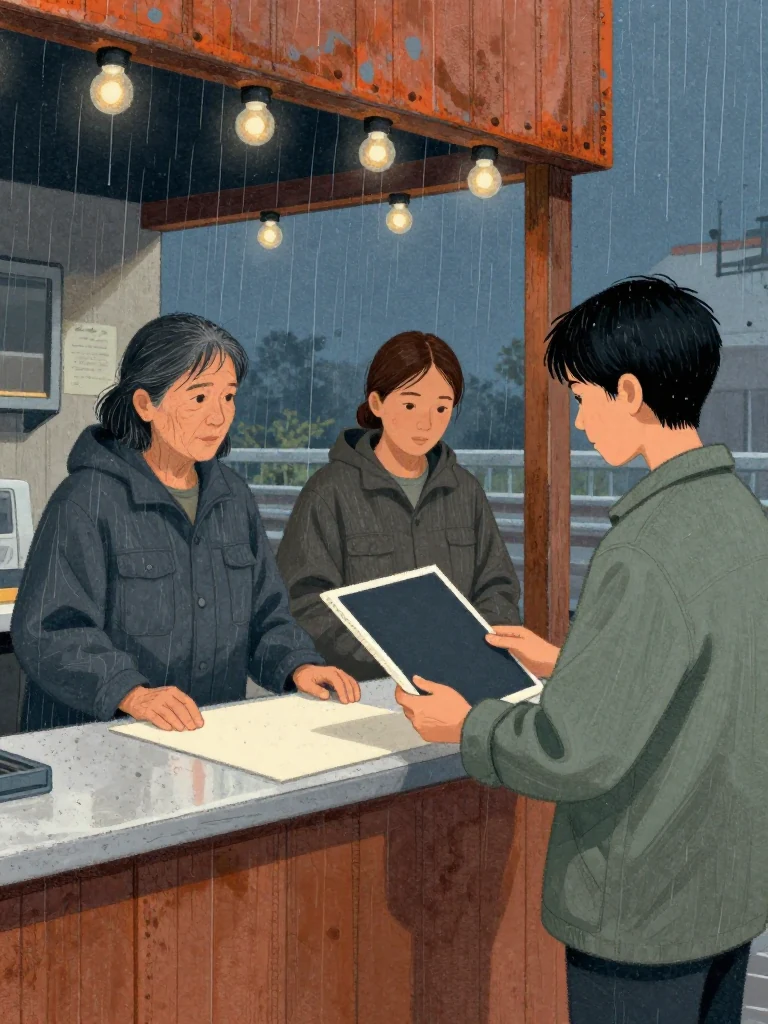
"He was waiting alone. That was the error, Coral. Not the waiting — the alone."
Noor folded the letter along its nine-year creases and laid it beside the referral copy on the counter, where it would travel upstate as context: not an accusation, a dead man's dated suspicion, in his own hand, next to six tags and a die.
Juno opened the binder to Entry 112 — the materials list stopped mid-line, nine years of patience above it — and slid it across the counter to Noor with both hands, the way Coral had passed the whole book in the rain in September.
"He got it to one hundred eleven. You're the second reader."
"Then we finish it the way he couldn't. Out loud. With the margins stated. All of us."
Outside, the festival bulbs were going out along both banks, and the tide ran down the channel in the dark, on schedule, taking the season with it and leaving the town it had tested still standing on its own bones — old, underfunded, engineered against, and held, within a stated margin, by hands that wrote everything down.