12 panels · Automated checks complete
Six days after the king tide, the works budget meeting gave Pump Station Nine four minutes and moved the repair to the contingency list, which was where line items went to become anecdotes.
Noor stood at the back of the annex with her folder of photographs and watched it happen. Dev did not meet her eye. He was two years from a pension, one man short, and the arithmetic on the whiteboard was older than both of them.
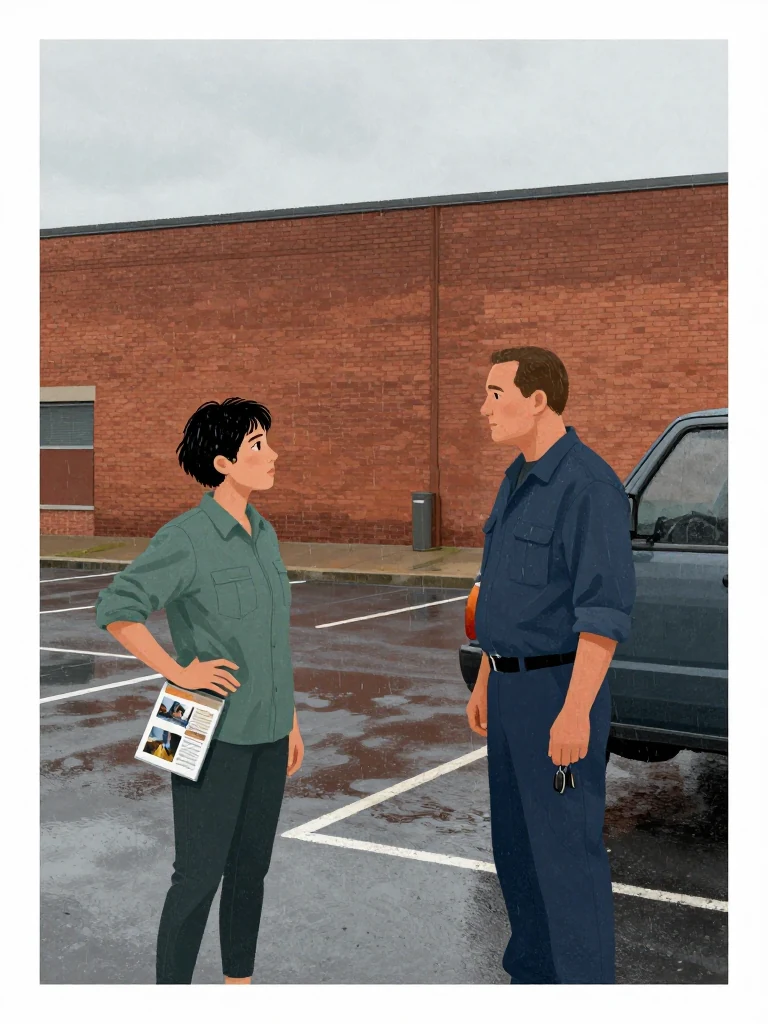
She caught him in the parking lot before he reached his truck.
"The baffle is plywood and barrel lids. The zinc bridge is a jumper cable. Those were boarding passes, not repairs."
"I know what they were."
"Then the file should know it too. I'm submitting a decay schedule. Dated. What each fix is, what it's borrowed against, and the week it stops holding."
Dev looked at the folder the way men look at paper that can testify.
"You're putting in writing that the ward is one storm from wet."
"I'm putting in writing that temporary means temporary. If the town wants to gamble, it should see the odds it's getting."
He signed the receiving line against the hood of his truck, and the town's borrowed margin became a public document with dates on it. She was still standing in the lot when the ferry horn went. Three short blasts, spaced. Not a schedule sound. Trouble.
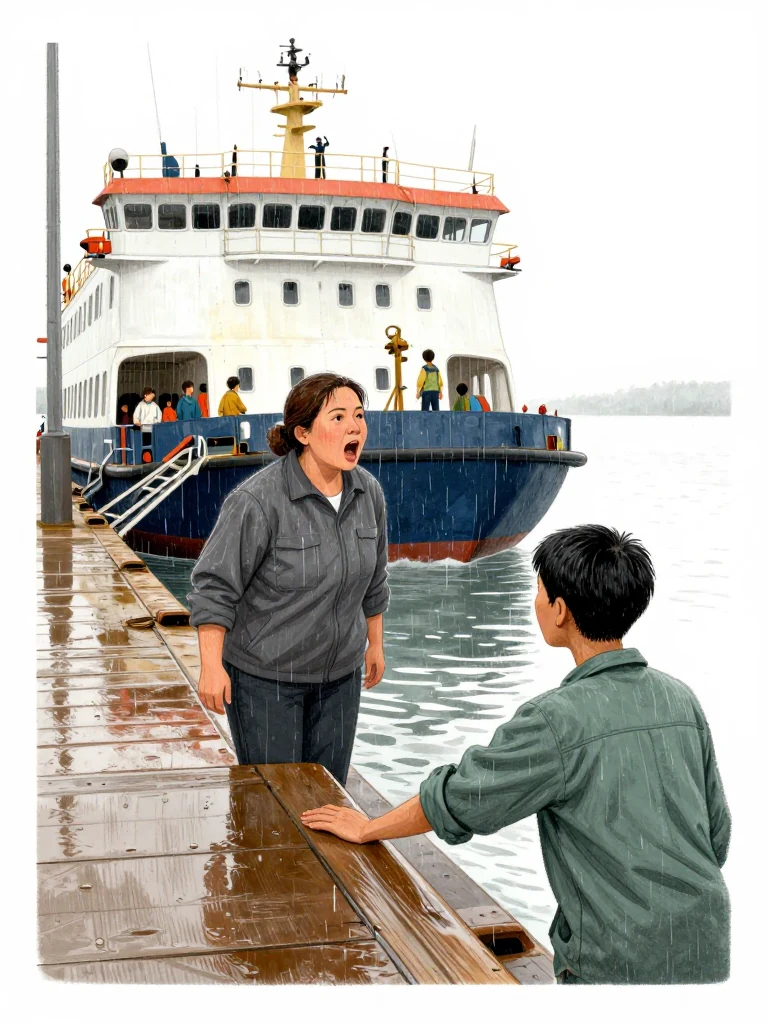
The landing was four minutes by bike and Juno beat her there, because Juno beat everyone everywhere. The morning boat was against the pontoon with the school run half-embarked — eleven kids across, nine still queued on the pier — and the gangway's shore-end corner had dropped six inches and sat grinding on the pontoon lip with every footfall.
Noor came through the rail gate, put her flat palm on the gangway stringer, and felt the grind travel up through her arm. Hinge pin. The shore end hung on two pins, and the seaward one had let go — not bent, gone. The dropped corner was riding on friction and luck.
The deckhand had the queue stopped. The kids already aboard pressed at the ferry rail to watch. Reyes's truck was audible, still blocks out.
"Everybody off the span, high side, one at a time. Nobody runs."
Juno relayed it louder.
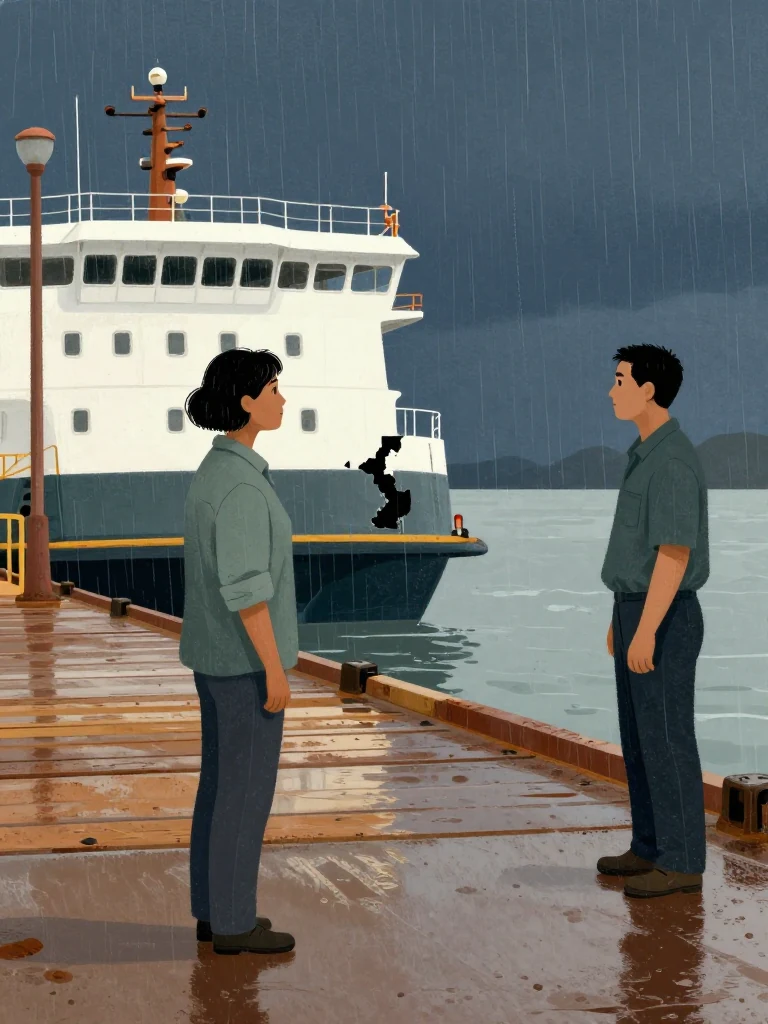
"High side! One at a time! Walk!"
The four kids mid-gangway came off the high edge one by one, and the corner grated down another finger-width as the load shifted, and then the span was empty and still wrong.
The deckhand looked from the span to Noor.
"Can they finish boarding?"
"Not on that. Not yet. What's in your gear locker?"
"Chain hoist. Two-ton, for engine lifts. Shackles, slings."
"Get it."
The deckhand had the manual open on the piling, and he read the paragraph out loud because that was the procedure.
"Gangway or ramp failure. Suspend operations, secure the landing, notify county engineering, await inspection."
"How long does county engineering take to get here?"
"Last time? Four days."
"The manual says close the landing and call the county. The manual thinks the county answers."
Noor said it flat, without heat, because it was arithmetic and not opinion. Nine kids on the pier had school across the water. A closed landing stranded the run for hours, and a stranded school run photographed exactly like the condemnation report wanted the waterfront to photograph.
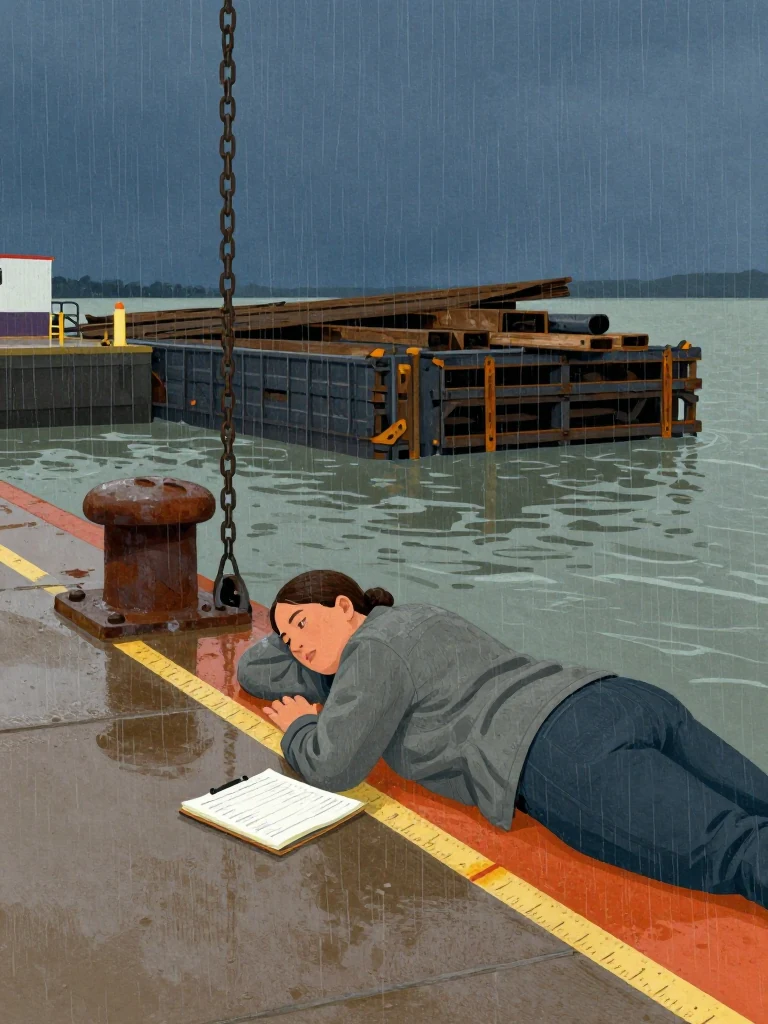
She looked at what the landing owned. The ferry's gear locker held a chain hoist rated for the boat's own engine lifts. The pier had a bollard with clear line to the dropped corner. Verity's yard was ten minutes away, but the tide table in her jacket said she wouldn't need it. Low water had turned forty minutes ago.
"Here's the hold."
She said it to Juno and the deckhand together, and pointed as she spoke.
"Hoist takes the corner. Juno reads the trim. The tide does the lifting."
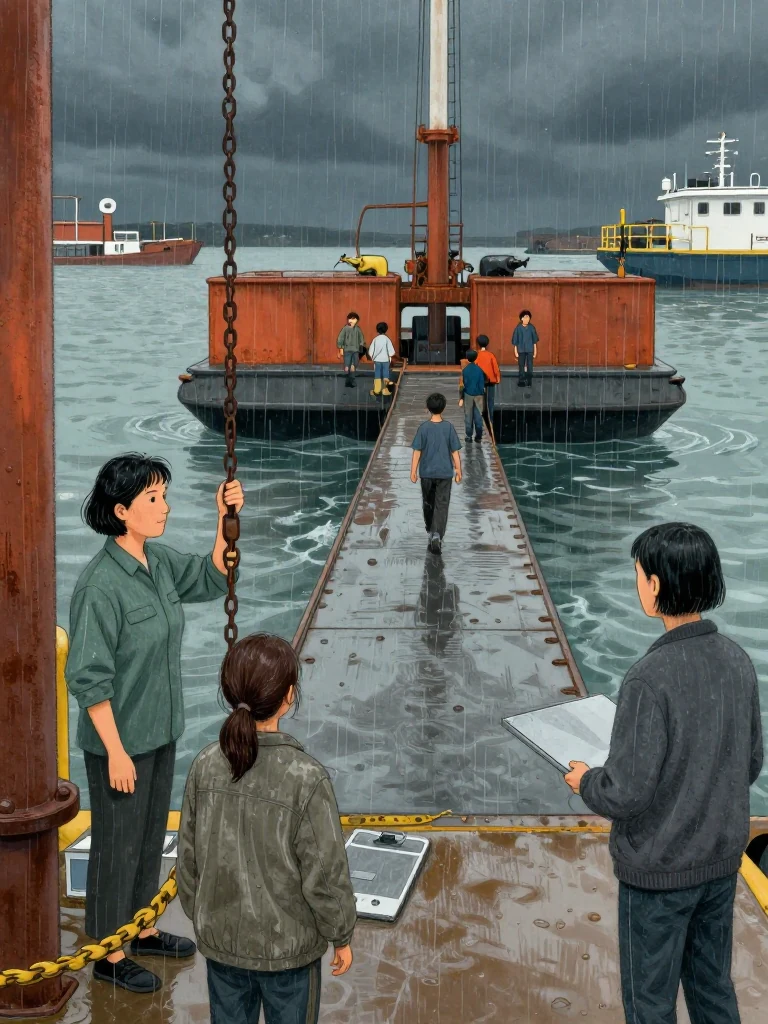
The hoist went from the bollard's base to the gangway's lifting lug, and she cranked the dropped corner up level with the click count said aloud, so everyone near it heard the load move by numbers. The dead hinge's share of the span now ran down a chain into the pier instead of grinding on the pontoon. That was piece one, and alone it was not enough, because the pontoon's trim shifted with every boarding footfall and a chain has no give.
So Juno lay on the pontoon edge with her notebook and read the freeboard off the painted scale.
"What am I watching for?"
"Thirty-eight or below, you call it and boarding stops mid-step. Read me the number every fourth step. Say it even when it's boring."
"Especially when it's boring."
"You have been paying attention."
The readbacks started before the first kid stepped on.
"Forty-one. Forty-one. Forty. Forty-one."
And under all of it the tide was coming, which was the third piece and the quiet one. Twenty minutes of flood would float the pontoon a hand higher and take the last of the dead load off the span. She had read the window off the table before she touched the hoist. The tide came up under the pontoon like a patient jack.
"This holds one boarding. Then the landing closes till the pin's replaced."
She said the margin to the deckhand and to Reyes, who had arrived with his clipboard and stood exactly where the manual said observers stood.
"State your name and status for the record."
"Noor Haddad. Civil engineer, license suspended. Same as last week."
"Noted. Same as last week."
Nine kids crossed the leveled span one at a time, unhurried, each footfall answered by Juno's number. The boat left on time, or near enough that no one would remember otherwise.
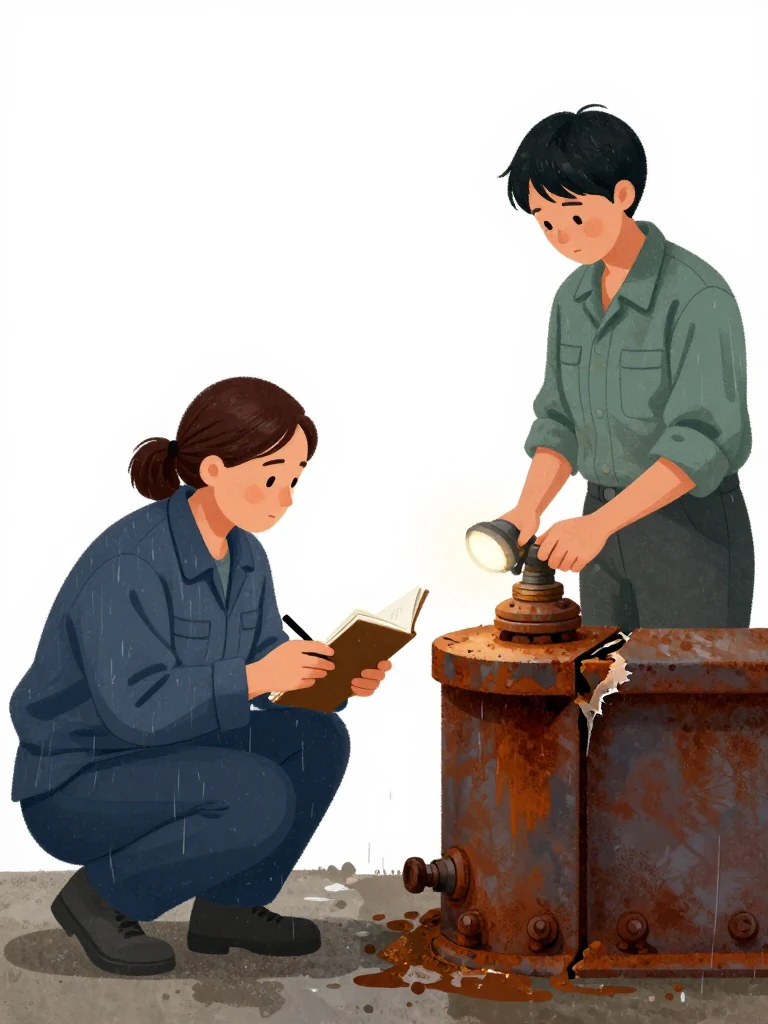
Then the landing closed, because she had said it would, and the pin came out for the report.
It did not come out clean. The pin was galled half its length — dry metal welded to dry metal in smears — and sheared at the retainer groove. She turned it under the light and read the fracture face the way Gideon's binder had taught her to read everything: the smooth crescent of old fatigue, the crystalline rush of final shear. This pin had been dying for weeks. Grease-starved. And the grease nipple above it was packed with something that had wicked out and left wax.
Juno crouched next to her, and went still, and then flipped her notebook back a month with her thumb like a card player.
"I wrote it down. September twelfth. The pin squealed all morning."
She held the page out flat. Time, reading, sketch — the squeal noted at three separate boardings, the last with a question mark and the word GREASE printed in her capitals.
"Why didn't I tell somebody?"
"You told your notebook. That's more than the county's told anybody in two years."
"A squeaky hinge isn't a report."
"No. But a squeaky hinge, dated, next to a starved pin, next to that —"
Noor stopped, because she had just seen the tag.
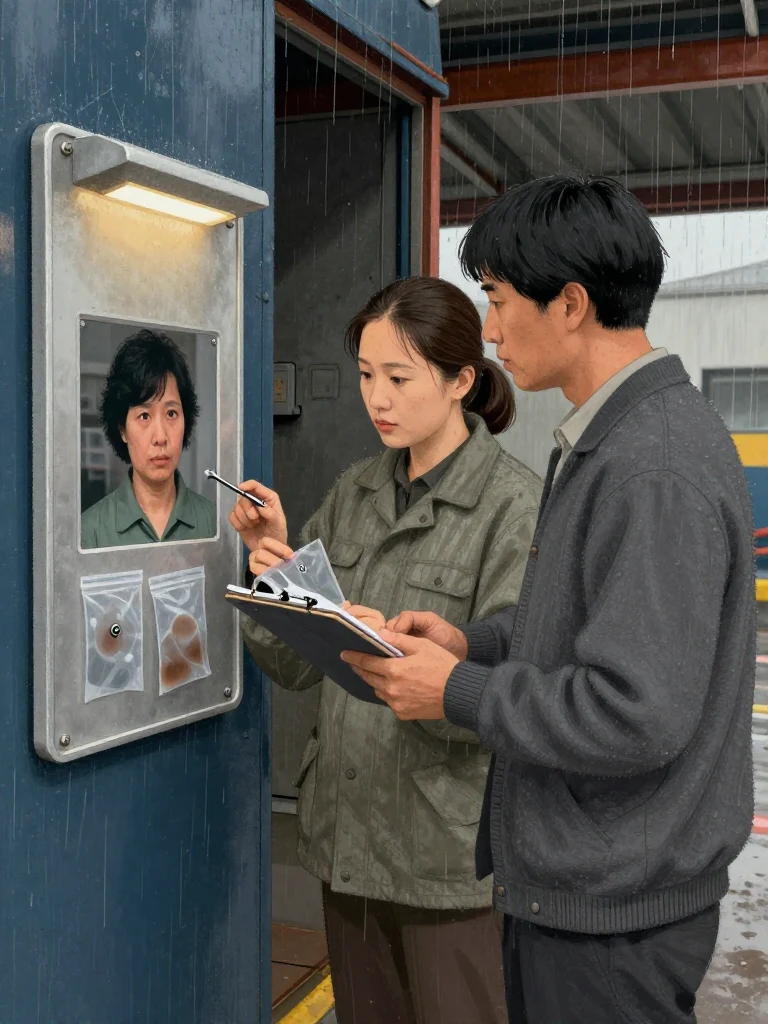
It hung wired to the hinge bracket, where a maintenance tag belongs: an aluminum blank with the county seal struck into it, a service date, and a sequence number. Noor photographed it in place before her hands were sure. Then she laid her phone beside it with the photograph of the first tag from Pump Station Nine, and looked from strike to strike, and the same tired letter looked back at her from both — a serif in the seal worn down to a bruise.
"Same die. Next number. Three weeks apart."
Reyes wrote for a while without speaking. Then he bagged the pin, and the tag, and took certified photographs of Juno's September page.
"You understand what I have to do now."
"Say it for the record."
"Unlicensed repair of public infrastructure. Second documented instance. Formal warning to follow in writing."
"Understood. And the tag?"
"The tag goes in evidence next to its brother. That's also for the record."
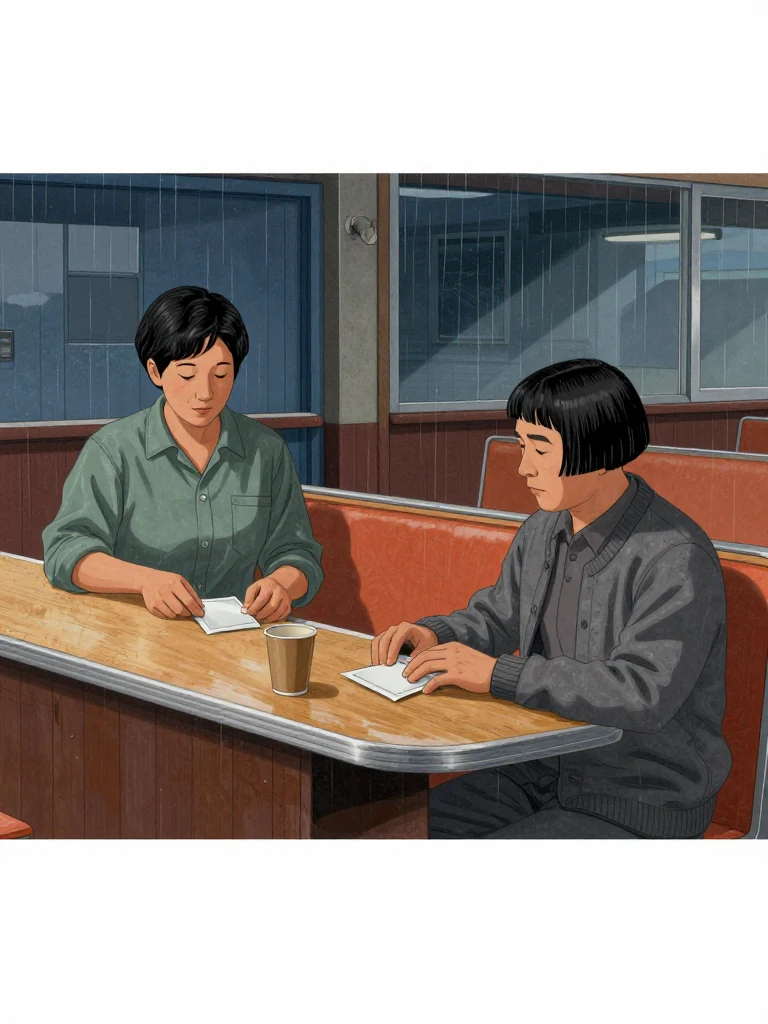
The warning came the next afternoon, and she signed for it at his office counter without argument, because arguing with the only officer in the county who read evidence would have been spending the wrong asset. She put the series memo on the counter as she signed: two tags, one die, sequential numbers, dates three weeks apart, a worn serif shared like a fingerprint.
Reyes read it twice. Then he was quiet in the way of a man deciding which errand not to delegate.
He told her the rest of it two days later, at the diner counter, off-shift, in the flat voice he used for facts he wished were opinions.
"The county retired its tag dies nine years ago. Inventoried, boxed, signed into dead storage at the works annex. My signature is fourth on the transfer sheet."
"You went and looked."
"I went and looked. Myself, on my own time, because I wanted to be wrong in private."
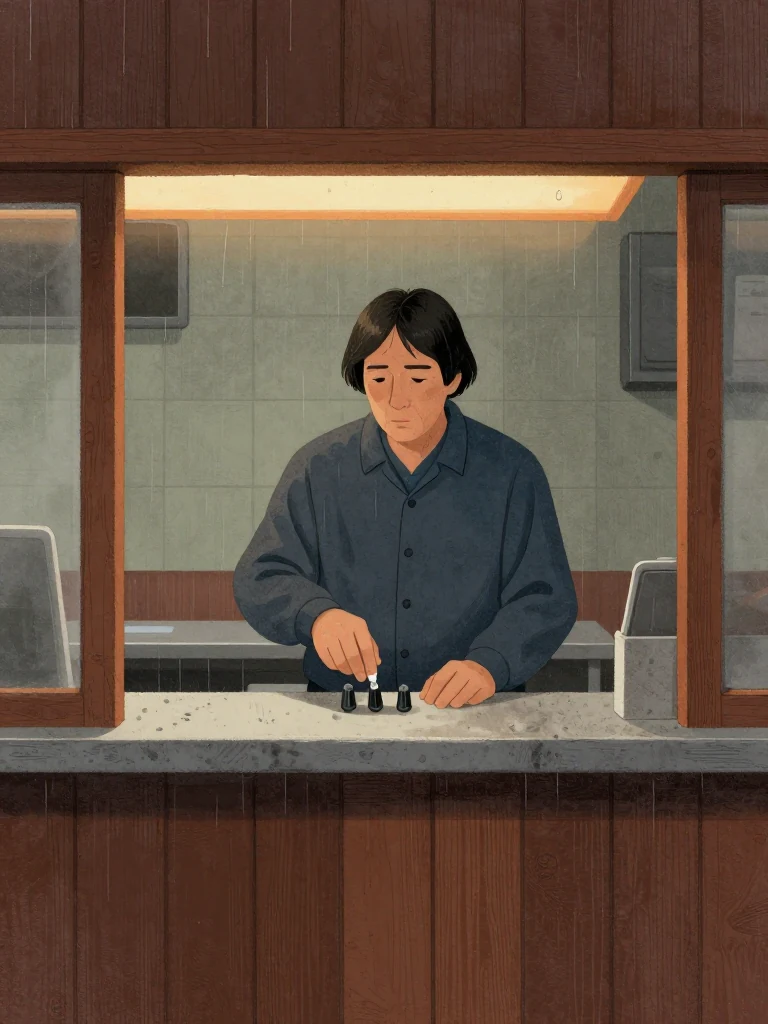
"And?"
"The drawer has a felt slot for die number three. The slot holds the shape of a die and no die. The sign-out card is blank."
"Blank since when?"
"Nine years of blank."
He tapped his pen three times on the counter, which was as close as Abel Reyes came to swearing.
"The warning stands. And the die doesn't."
Noor turned her coffee cup a quarter-turn and thought about keys.
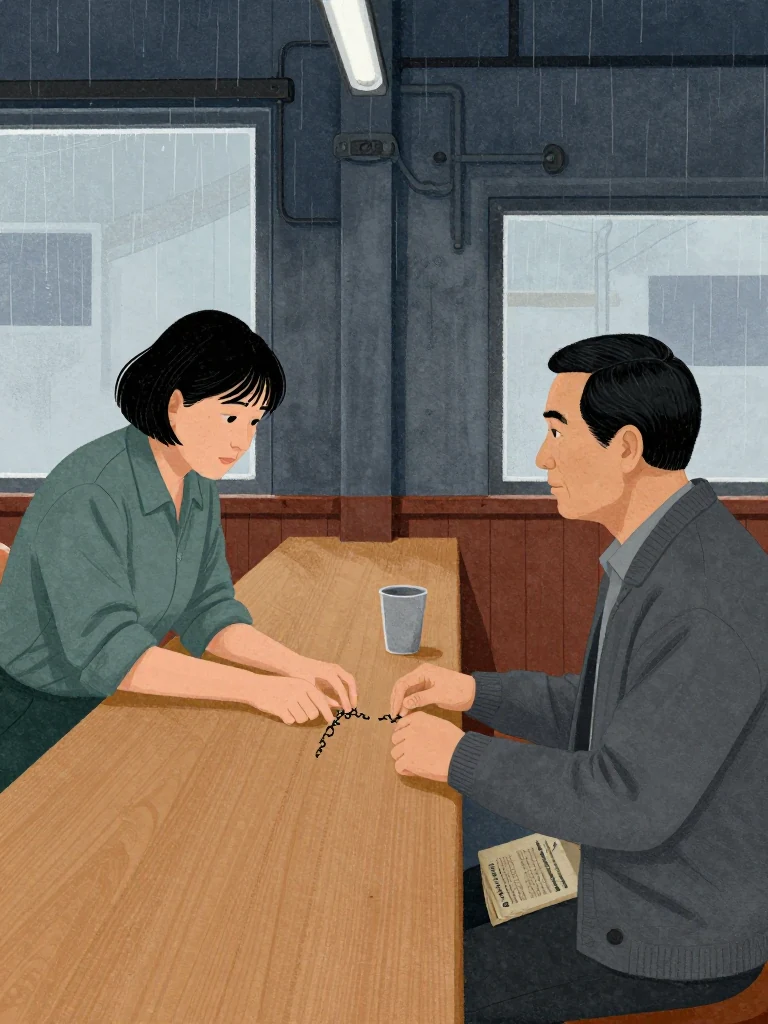
"Dead storage doesn't get broken into. It gets walked into. By somebody whose keys fit, on a day nobody counted."
"That's the shape of it."
"So the hand has county keys. Or had them once."
"That's the shape of it too. And I can't put a shape in a ruling."
"Then I'll keep handing you edges until it's a picture."
Whoever held the die had been arranging failures on a calendar while Gideon's grease-pencil dates were still climbing the station door.
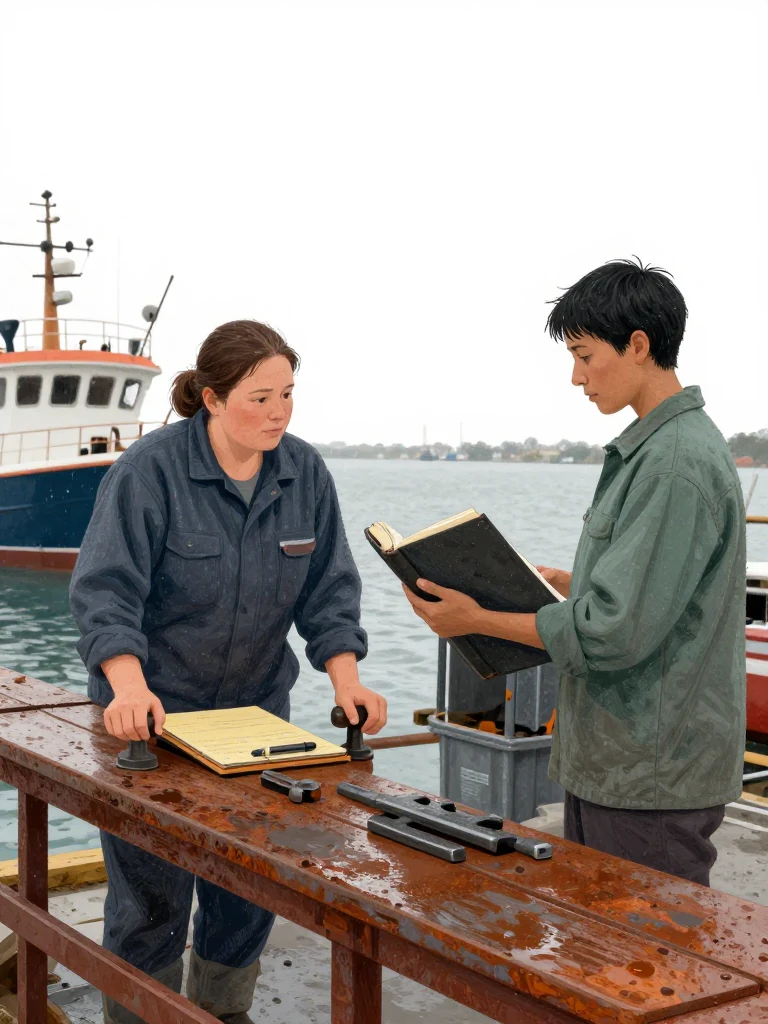
She told Juno that evening, at the yard, while they replaced the gangway pin properly on Marta's bench because the county's contractor was six weeks out and the school run could not wait six weeks.
"The notebook job is real now. Every reading dated, every page numbered. You're the record."
Juno looked at her notebook like it had grown.
"What am I recording?"
"A series. Somebody is spending this town's margin on a schedule, and the tags are how they file their work."
Juno wrote that down too, with the time.
Behind them on the bench lay Gideon's binder, open to the index. Entry 23, load paths, was grease-dark at the corner like all the used pages. Entry 112 was still a materials list that stopped mid-line — and for the first time Noor wondered whether the unfinished entry was a repair Gideon had not lived to make, or a record he had not dared to finish.