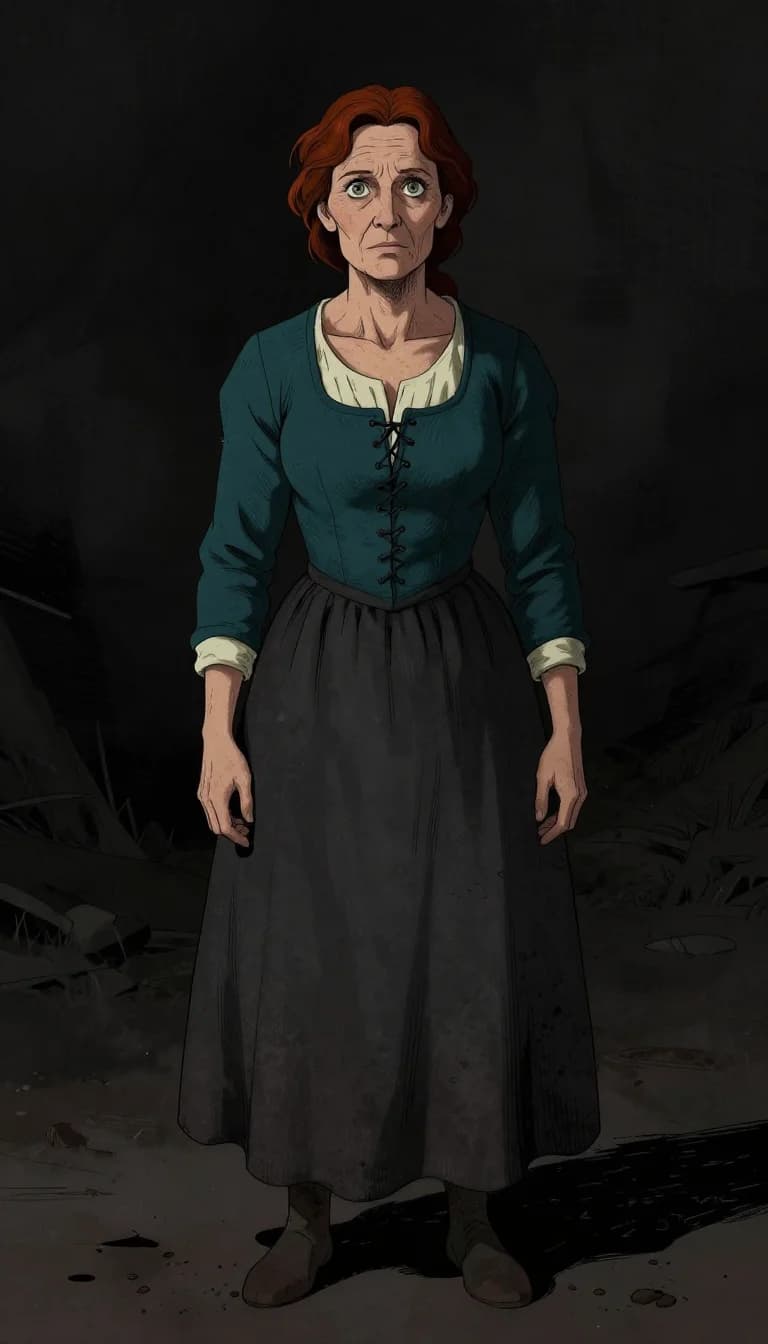
Maren Hale

Chapter 3

The Shore That Refused the Dead

Maren reaches the waters off Roanoke carrying the grim certainty that she has come to confirm a grave. Instead, the coastline unsettles every prepared conclusion: smoke appears where no official record permits habitation, a watch signal vanishes too quickly to be accident, and the shore bears signs of use too deliberate to belong to wilderness alone. When Maren attempts to land in secrecy and preserve her findings in notes, she is intercepted by Asha Wren, whose caution makes plain that discovery here is not a miracle but a threat. Forced inland under wary guard, Maren sees the first hidden proofs of a living settlement shaped by disappearance rather than conquest. The chapter closes with Maren realizing that the mystery she crossed an ocean to solve is not a relic of the lost, but a society that has survived by refusing to be found.

Part 2: The People Who Chose to Vanish3 scenes938 words

Chapter Summary

Maren reaches the waters off Roanoke carrying the grim certainty that she has come to confirm a grave. Instead, the coastline unsettles every prepared conclusion: smoke appears where no official record permits habitation, a watch signal vanishes too quickly to be accident, and the shore bears signs of use too deliberate to belong to wilderness alone. When Maren attempts to land in secrecy and preserve her findings in notes, she is intercepted by Asha Wren, whose caution makes plain that discovery here is not a miracle but a threat. Forced inland under wary guard, Maren sees the first hidden proofs of a living settlement shaped by disappearance rather than conquest. The chapter closes with Maren realizing that the mystery she crossed an ocean to solve is not a relic of the lost, but a society that has survived by refusing to be found.

Scene 1

291 words

Maren reaches the waters off Roanoke prepared to verify a grave, but the shoreline refuses the shape of death she expected. Smoke lifts and disappears where no habitation should be, a signal flashes and is withdrawn, and the coast bears an unsettling order that contradicts every official account she has carried across the Atlantic.

At first light the boat nosed into the sound, its oars lifting black water that smelled of salt, rot, and marsh grass crushed under tide. Maren stood where the craft allowed her, knees set against its sway, one gloved hand whitening on the damp rail. Roanoke lay ahead in a veil of pewter haze, low and watchful, offering none of the merciful plainness she had crossed the ocean to find.

She had prepared herself for remains. Charred posts. Fallen palisade. The poor blunt testimony of bones. In London, grief had made such images orderly; they could be measured, copied, entered into a margin beside her father's cipher. But the shore refused that shape. Behind the reeds, a thin breath of smoke lifted, darkened, and was gone before she could call another man to witness it. A moment later, high among the wet grass, light struck something polished: one bright flash, deliberate as a blink, then nothing.

The sailor nearest her muttered that the sun played tricks over marshland. Maren did not answer. She watched the beach resolve by inches. There were channels through the grass too narrow for tidewater and too repeated for chance. A break in the scrub faced the sound at a useful angle. Even the quiet seemed kept, not born.

Her satchel pressed against her hip, heavy with paper, ink, instruments, and the folded chart that had brought her here. If the island lived, then Edmund Hale had not drawn a memorial. He had drawn a way in.

Maren lowered herself onto the thwart and reached for the small bundle hidden beneath her cloak. “Put me ashore there,” she said, pointing not to the open sand, but to the shadowed cut in the reeds. “And make no sound.”

Scene 2

330 words

Maren slips ashore determined to secure written proof before anyone can interfere, but her first act of documentation becomes the thing that exposes her. As she marks signs of habitation in her notebook, Asha Wren emerges from concealment, disarms her of privacy, and makes clear that being found here is not a wonder but a danger.

Maren grounded the skiff where the reeds bent inward like fingers closing over a secret. Mud took her first step to the ankle and released it with a wet, unwilling sound. She pulled the little boat beneath a curtain of sedge, looped the line twice round a root, then stood listening until the sea's hush and the insect whine resumed their ordinary dominion.

No ruin greeted her. That was the first offense against every conclusion she had carried across the ocean. The bank bore cuts too clean for weather, a narrow track pressed through grass, ash pale beneath damp leaves where a covered fire had been buried. Far inland, the smoke she had seen from the ship was gone, but its memory held a place in the air.

She opened her notebook with fingers still stiff from rowing. West by north from the inlet. Reeds shoulder high. Path concealed at second cedar. She sketched quickly, the nib scratching over paper, ink and iron-rich marsh water sharp together in her breath. The act steadied her. Put down the line, then the angle; make fear submit to measure.

A twig snapped behind her, soft as a knuckle against a door.

Maren turned with the pen still in her hand. A young woman stood three paces off, bow drawn, arrowhead fixed on the hollow beneath Maren's throat. Marsh water blackened her hem. Her face was calm in the terrible way of someone who had decided before appearing.

"Close it," she said.

Maren's thumb tightened on the page. The woman stepped nearer, took the notebook cleanly from her grasp, and looked not startled but practiced as her eyes moved over the marks.

"You come ashore making a ledger of us," she said. "Do they teach that before or after they teach you to call people lost?"

The path behind her waited, darker than the reeds. Maren swallowed, and for the first time the page looked less like proof than a wound she had opened.

Scene 3

317 words

Escorted inland, Maren glimpses the first living proofs of a hidden settlement built from patience, inheritance, and refusal. Asha tests Maren's name against her father's legacy, then places in her hand a scrap of oilskin marked with Edmund Hale's cipher, proving that Maren's father once stood here and chose silence.

Asha kept Maren between two silent figures as the path slipped under pine shadow and folded back upon itself. Behind them the sea fell away, not by distance alone but by design. Branches had been trained low enough to break a straight gaze. Mats of brown grass covered the softer mud where a boot might confess its passage. Once, Maren saw a notch in bark filled with dark resin, and understood it was a sign only to those meant to read it.

Then the trees thinned by inches, and the impossible breathed.

A roof lay almost flat beneath cedar boughs, its clay-daubed seams hidden with moss. Smoke rose from a hollow stump and unwound into the green as if the forest exhaled it. Strips of fish dried behind a net of thorns. Near a root, half buried in needles, lay a small horse carved from pale wood, one leg smoothed by a child's thumb. Maren's hand twitched toward the journal at her breast before she felt Asha's gaze arrest it.

"Your name," Asha said.

"Maren Hale."

The surname changed the air. One guard shifted. Asha's mouth hardened, not with surprise, but with recognition long kept sharp.

"Hale," she repeated. "A man with your eyes stood here before. He asked much. He heard more."

From her sleeve she drew folded oilskin, creased white, warmed by her palm. She held it back until Maren had no choice but to meet her eyes.

"And then he left us unwritten."

The scrap settled into Maren's hand with the soft waxen drag of old weatherproofing. Ink showed through: compressed strokes, angled pauses, her father's private measure of thought. For a moment there was no forest, no hidden roof, no breath in her body. Only Edmund Hale's hand, alive on a thing he had chosen not to publish.

Maren closed her fingers around it. The proof she had wanted had become an accusation.

The Shore That Refused the Dead | Maren Hale | Fictures