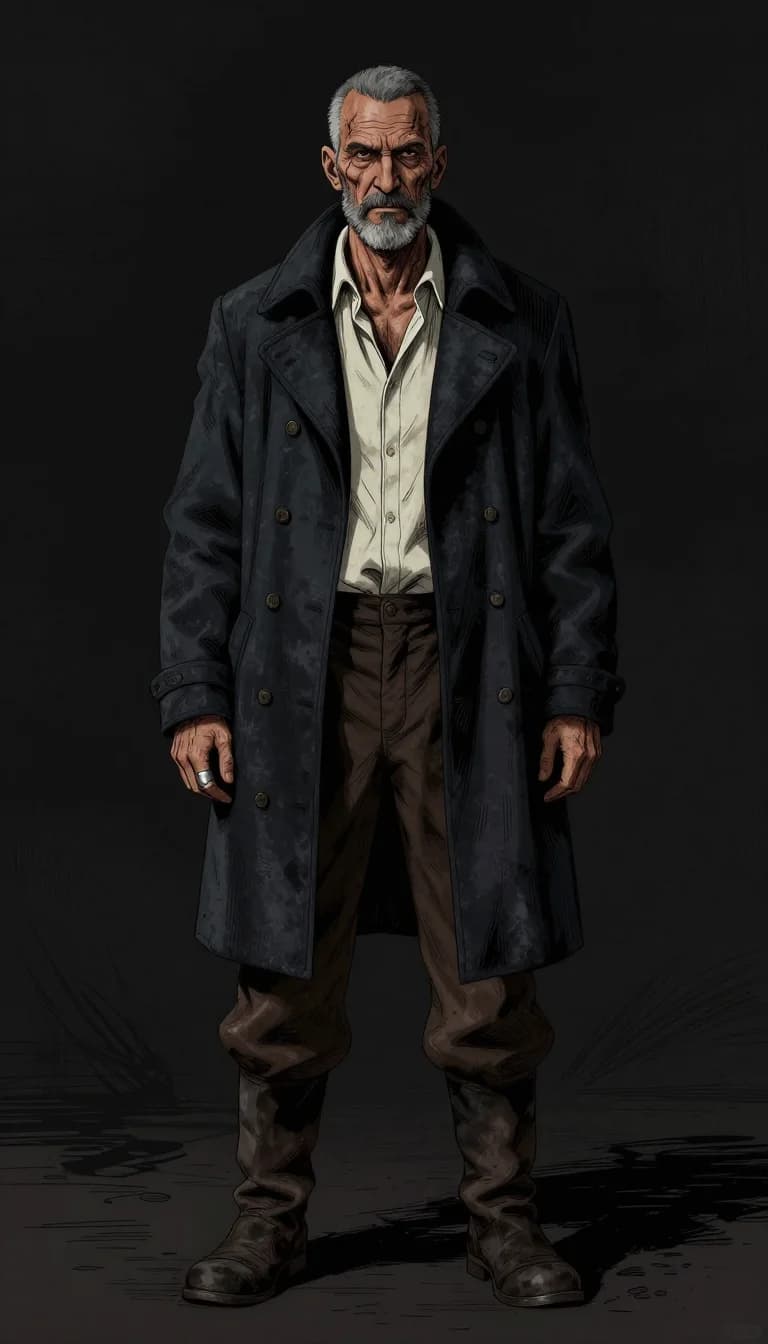
Tobias Crane

Chapter 1

The Latitude of Shame

Tobias Crane relives the naval mistake that ended his service to the Crown, a single command issued through pride and fear of hesitation that cost good men their lives. In the years after disgrace, he remakes himself into a captain who worships precision, routine, and obedience, convincing himself that doubt is deadlier than any storm. When Edmund Hale later extends him the credit that lets him command his own vessel, Tobias receives the loan not as kindness but as a sentence he must spend the rest of his life repaying.

Part 1: The Debt Comes Due3 scenes894 words

Chapter Summary

Tobias Crane relives the naval mistake that ended his service to the Crown, a single command issued through pride and fear of hesitation that cost good men their lives. In the years after disgrace, he remakes himself into a captain who worships precision, routine, and obedience, convincing himself that doubt is deadlier than any storm. When Edmund Hale later extends him the credit that lets him command his own vessel, Tobias receives the loan not as kindness but as a sentence he must spend the rest of his life repaying.

Scene 1

286 words

Before sunrise on a Crown vessel, Lieutenant Tobias Crane studies uncertain waters while pressure from rank, reputation, and his own fear of appearing indecisive closes around him. The crew waits for a call on whether to shorten sail and sound again, and Tobias mistakes the appearance of confidence for the substance of judgment.

The sea before dawn had the dull color of worked metal, flat in one breath and wrinkling black in the next. Tobias kept both gloved hands on the rail, though the wood was slick enough to numb his palms through the damp wool. Salt gathered on his lashes. Ahead, the coast appeared and vanished inside the mist, a smear of darker gray that refused to stay where his reckoning said it belonged.

The mast gave a hollow knock above him, and somewhere aft a block tapped in an uneven rhythm, like a patient finger on a table. Men moved softly on the deck, not idle, not relaxed, each sound careful with waiting. He could feel their attention without turning. He had already asked for the last sounding sooner than pride liked; to ask again would carry farther than any order.

"Heave to and cast the lead once more, sir?" the master's mate said at his shoulder.

The question slid under Tobias's coat like cold water. He heard not caution but scrutiny, heard the wardroom voices that had always spoken of hesitation as rot in an officer. If he checked again, if he faltered now, every eye on deck would mark the gap between command and certainty. His throat tightened.

"No," he said, too fast, too hard. "Hold her as she stands. Keep the present sail."

The mate repeated it. Other voices took it up. The words traveled forward and aft, each repetition driving them deeper into timber, canvas, and flesh until they were no longer his judgment but the ship's fact. Tobias stared into the wet dark and knew, before any cry rose, that he had chosen the sound of confidence over the labor of doubt.

Scene 2

303 words

Tobias's command ends in catastrophe when the vessel strikes hidden rock and throws men into chaos and freezing water. In the immediate aftermath, he learns the lesson that will poison him for years: doubt feels survivable until other men die for it.

The bow answered his order with a violent rise, as if the sea itself had seized the hull and tried to tear it in half. Timber shrieked from keel to rib. Tobias pitched to his knees, palms slamming wet planks slick with spilled tar, while a lantern burst against the rail and sprayed the deck with fire before the next wave smothered it. Someone forward screamed his name. Then came the deeper sound beneath every other noise, the grinding, murderous rasp of wood pinned on stone.

Men were already falling. A mast line snapped like a musket shot and whipped across the deck, catching Keene in the throat and flinging him backward without a cry. Freezing spray hit Tobias's face hard enough to sting. Salt filled his mouth. He lurched up and began shouting the right orders at last, each one clean and sharp now that sharpness no longer mattered. Cut that line. Lower the boat. Haul together, damn you, haul. The crew moved because men always moved when given something definite to obey.

But the sea had taken the minutes he had spent weighing pride against caution. One sailor vanished under a tumble of black spars and white foam. Another surfaced off the larboard side, one bare hand reaching from water dark as ink, and Tobias saw the plea in his eyes before the ship rolled and carried that face out of the lantern glow forever.

At dawn the wreck beat against the hidden rock below them with a hollow, patient thud. Tobias could name the bearing, the depth, the error in judgment. He could not name anything that would bring the dead ashore. Standing numb in soaked wool that clung like ice, he understood the lesson that would outlive his uniform: doubt in a captain is paid for by other men.

Scene 3

305 words

Years after his disgrace, Tobias rebuilds himself into an exacting merchant captain whose routines leave no room for instinct or mercy. When Edmund Hale offers the credit that lets him command his own vessel, Tobias receives the gesture as a binding sentence, especially when Hale refuses immediate repayment and leaves the debt undefined.

Years after the wreck, Tobias Crane learned to survive by shaving the world down to lines a rule could measure. His ledgers lay on the cabin table with every figure squared and sanded dry, the columns so straight they might have been cut with a knife. He timed the loading of flour, lamp oil, and water casks by the glass, corrected knots with cold fingers, made boys repeat simple orders until their voices lost all complaint. Sailors called him steady. They did not hear how each small perfection muffled the same old splash in the dark.

By the time Edmund Hale sent for him, Tobias had earned a narrow reputation and almost no sleep. The countinghouse held the still smell of ink, damp wool, and old cedar. Through the window came the softened strike of harbor bells and, beneath it, the rank breath of wet rope drying on the quay. Hale studied the papers Tobias placed before him, one broad hand resting on the neat arithmetic as if testing timber grain.

“You keep a ship on paper before you ever touch the helm,” Hale said.

“It keeps men alive,” Tobias answered.

Hale looked at him for a long moment, then named the vessel, the amount of credit, the terms generous enough to feel like a misunderstanding. Tobias accepted standing ramrod straight, as though receiving judgment. He began at once to promise repayment by season and percentage, every pound accounted for, but Hale only rose, clasped his shoulder, and said the debt could wait until it was truly needed.

The words settled heavier than iron. A sum could be worked off. An open favor had no coast, no soundings, no end. When Tobias stepped back into the harbor light, he understood that he had not been released from service at all. He had merely changed uniforms.

The Latitude of Shame | Tobias Crane | Fictures